Rituals, Ruins, Reckoning and the Roots of Terror: Unearthing the Magic and Madness of Folk Horror.

We don’t go back, because if we go back, we enter a realm of superstition and madness! -Adam Scovell.

“There are two ways to be fooled. One is to believe what isn’t true; the other is to refuse to believe what is true.” – Søren Kierkegaard

Dream the myth onward and give it modern dress -Jung

As Helena P. Blavatsky suggested —No myth is wholesale fable; even fanciful fables hold a grain of truth.

Horror is a disruption of the way you think things should go- horror begins when the world stops behaving the way we believe it should. When the familiar world breaks its contract with us – when people, places, patterns, and events no longer appear to be as they seem. – jo gabriel

INTO THE DARK AND DREADFUL WOODS—Where Folklore Turns Ferally: A Journey Through Folk Horror -From Ancient Ritual to Modern Nightmare

Watching Kier-La Janisse’s Woodlands Dark and Days Bewitched: A History of Folk Horror (2021) cracked something open in me, a mix of awe and recognition. Janisse’s monumental exploration of folk horror doesn’t just teach you about a cinematic mode, which the term may be more apt than calling folk horror a subgenre; it feels like wandering through a haunted library of collective memory, where every story whispers about what we’ve buried and what refuses to stay down. Folk horror is all about that unsettling tension between the old ways and the modern mind, the rural against the urban, nature against reason, the living against what still stirs beneath the soil, dripped like midnight sap from the bones of the land or old wounds that still bleed.

In the play Penda’s Fen (1974), writer David Rudkin gives folk horror one of its most searching principles when the visionary King Penda calls for “our sacred demon of ungovernableness.” His blessing that Stephen become “dark, true, impure and dissonant” rejects the fantasy of a pure, obedient, respectable England, asking instead that he recognize the repressed forces beneath it—sexuality, pagan memory, violence, desire, doubt, and historical conflict, rather than deny it. It applies to folk horror by using England’s buried pagan past and haunted landscape to expose and reject the false purity and conformity of modern authority.

Hauntology names this unsettling sense and sets an atmosphere around the past’s ghostly persistence: the present has failed to detach itself cleanly from the past, the past survives, and something buried continues to exert pressure on contemporary life.

Modern classic …Midsommar. Photograph: A24/Allstar

Coined by Jacques Derrida in Specters of Marx and later developed in cultural criticism by writers including Mark Fisher, the term ‘hauntology describes not simply ‘ghosts’ but the disturbing persistence of what should have disappeared; what lingers after it should be gone—abandoned beliefs, the repressed, colonial violence, unresolved and buried histories, discarded customs, vanished or lost communities, obsolete forms of culture, and even futures that were promised but never arrived. Its question is quieter, though no less unsettling: why does this past still have such power over the present? It’s not necessarily about literal ghosts; it describes the eerie feeling that time has failed to move cleanly forward.

It may include explicitly – witches, cults, sacrifice, supernatural forces, or even a sacrificial god or deities whose authority persists beneath the surface of modern life.

It may have no monster at all; the dread can arise from memory, nostalgia, loss, or temporal dislocation (for example, in Picnic at Hanging Rock 1975)  —where the past never quite stays in the past, and the present begins to feel shaped by something older, stranger, and unresolved -the past, present, and future no longer feel separate, orderly, or stable, as if they have begun to bleed into one another and time feels displaced, repetitive, haunted, or out of joint.

Nigel Kneale, The Stone Tape, BBC, aired 1972

It asks: What ancient force survives here? It asks: Why does this past feel unfinished—and why is it still affecting us? Hauntology gives the folk-horror mode or subgenre a useful language for its particular sense of time- the time that has not passed; it describes the sensation: not simply the survival of old beliefs or rituals, but the uneasy feeling that the past has never properly left.

Peter Weir’s Picnic at Hanging Rock 1975: Temporal dislocation through colonial order meeting an ancient landscape.

In folk horror, the present is “haunted”: a remnant, an afterimage, clings to a field, a village rite, a standing stone, an old song, a ruined church, a bonfire, a May Day procession, a black goat, a strange local custom, a deceptively festive gathering, a tenement hallway, a suburban home, or even a mirror, a forgotten recording, or an old book found in the cellar, making the familiar feel as though it remembers something we do not. These places and objects carry meanings that precede and exceed the outsider who encounters them.

In his 2017 book Folk Horror: Hours Dreadful and Things Strange, Scovell describes a “folk horror chain” built from four connected elements: landscape, isolation, a skewed belief system, and a final “happening” or summoning.

Sam Raimi’s film The Evil Dead 1981 does not follow this pattern in the most traditional way; there is no insular village or community ritual at its center, but it does bend the formula into something leaner, meaner, and considerably bloodier. The remote woods create the landscape; the collapsed bridge turns that setting into a trap; and the skin-bound Book of the Dead and its recorded incantations preserve a buried belief system that the visitors/outsiders unknowingly bring back to life. When they play the tape, the film reaches Scovell’s final link: a supernatural happening that overtakes the cabin, the forest, and eventually the bodies of the people inside it.

Scovell describes landscape as something that isolates characters from the ordinary social world, producing more of a hidden logic at odds with the familiar order of things, and draws them into older, stranger beliefs that end in violence or a supernatural event. That ‘folk horror chain’ fits neatly with Raimi’s The Evil Dead 1981: the remote cabin, hostile woods, ancient text, and the demonic possession it unleashes.

The Evil Dead 1981 cabin: At the edge of an ancient wooded evil, the cabin offers no true refuge; it is the confined threshold where the outside force enters, isolates, and consumes the people inside, and there’s no way back.

The terror lies not only in the possibility that an ancient force has survived, but in the realization that the past remains unfinished: it is still shaping bodies, beliefs, social relationships, and ideas of belonging. And when it makes familiar spaces seem to remember what its characters cannot yet know, it is too late to escape the story those spaces have been keeping alive.

Folk horror returns us to this unruly underside of national identity: a hauntological landscape in which the older world beneath the modern one is never wholly dead, its songs, customs, a legacy of violence, and forbidden desires still murmuring through all these traces and places.

Alan Clarke’s 1974 television film, Penda’s Fen

Penda’s Fen (broadcast in 1974, written by David Rudkin and directed by Alan Clarke) may not be the first film people reach for when they talk about folk horror, but I think it absolutely belongs in the conversation. It has none of the genre’s more familiar machinery: no isolated village turning on a stranger, no masked procession, no final sacrifice staged around a bonfire. What it does have is the familiar folk horror pull of an old landscape and the uneasy feeling that the version of England Stephen has been taught to love is only part of the story.

The past in Penda’s Fen is not some neat evil that can be uncovered and defeated. It keeps breaking through in the hills, in pre-Christian history, in Stephen’s sexuality, religious doubt, national identity that culture prefers to keep out of sight, and in the questions he begins to ask about faith and belonging. That is why the play feels so important to folk horror. It’s not a simple conflict between good and evil. It is not really about a community keeping an old ritual alive; it is about the things a nation tries to tidy away. It works toward the collapse of purity, desire, nationalism, enforced masculinity, religious conformity, contradiction, violence, and doubt, all coming back into view. The BFI places it alongside the folk-horror and folkloric television work that emerged in the late 1960s and 1970s, but what stays with me is how it turns the English pre-Christian past and its landscape into a challenge to the clean, proper version of Englishness Stephen has inherited.

Together, all these things make the familiar uncanny. We often register its persistence through ritual, that ‘landscape’, symbology, and collective memories that linger like ghosts within the present, making familiar places feel charged with that particular reckoning still undone and often an unspeakable legacy.

It all becomes unsettling because it appears to carry an unfinished history into the present. The mode—or subgenre, if that term feels more accurate when you say it- asks not only what ancient force survives, but why that past continues to structure contemporary life. The effect is often this: you look at something ordinary and, all of a sudden, you do not recognize it.

Folk horror is not concerned only with surface scares or ancient rituals. It is interested in the way isolated communities are shaped by inherited customs, collective fears, and sacred prohibitions that can seem irrational from the outside but carry real force within the group.

The films considered here in this essay demonstrate that this haunting need not be limited to an explicitly ancient or pagan past. The Wicker Man 1973 locates it in a revived agrarian religion whose rituals transform Summerisle into a sealed world of sacrificial continuity; Midsommar 2019 reconfigures that model through a contemporary commune that turns grief and emotional belonging into instruments of ritual seduction, initiation, conversion, and control; and Get Out 2017 relocates folk-horror logic to privileged, suspiciously ‘liberal’ America, where racial history persists through the seemingly polite face of doctors, hypnosis, and surgical ‘innovation’, fetishization, ownership, co-optation, and consumption. Together, the films suggest that folk horror’s most enduring specter is not paganism itself, but the recurring ability of communities to disguise violence as tradition, renewal, care, or progress.

In the evolution of Folk Horror in cinema, Chad Crawford Kinkle’s Jug Face (2013) would return to sacrificial logic, depicting an isolated community whose promise of protection depends on surrendering its own people to a sacred pit. Set in an isolated Southern backwoods community in the modern era, Jug Face presents a sacrificial order that has survived alongside the outside world rather than belonging to a safely distant past.

Its deepest horror lies not simply in the power beneath the ground, or ‘the pit,’ but in a social order that has made killing a neighbor an obligation to everyone else. The supernatural threat is real, but the social horror is the conversion of that threat into communal law: someone must die so that everyone else can continue calling the practice protection. It’s a necessary price of collective security.

Folk horror is often about the gulf between what seems familiar and what lies beneath it, between what is imagined and what is real. It does not simply frighten us with phantasms, specters, apparitions, wraiths, curses, or supernatural happenings, nor does it only live or seep in through the soil, the trees, and the old superstitions that cling stubbornly to remote villages.

Some folk-horror stories still unfold in isolated places, where the outside world feels like a distant rumor and local customs carry their own threatening logic, twisted codes, whether pagan rites, occult whispers, or time-worn rituals that blur belief into menace. But the genre can also thrive in modern spaces: suburban homes, institutions, affluent estates, housing blocks, and close-knit communities that make exclusion or cruelty seem natural.

Its visual set pieces do more than decorate those worlds; they make their hidden beliefs visible -physically. A standing stone, a harvest ceremony, a bonfire, a ruined church, or a lone figure in an open field can signal that we have crossed into a place governed by older rules. The landscape is never merely background. It holds a community’s memory and the rituals it has learned to protect or conceal.

In folk horror, the most striking ritual tableaux don’t simply lend a place its uncanny look; they give its beliefs a body, something the characters can gather around, enter, or be offered up to. They show us how belief has been built into ordinary life: where people gather, what they keep, which places they avoid, and what they’re prepared to do when a ritual calls for it. A standing stone or a bonfire matters less as an eerie image on its own than as a clue to the rules everyone seems to know except the newcomer or outsider. The setting begins to feel uneasy because it isn’t just holding a secret; people have arranged their lives around it

What makes folk horror unsettling is not always the supernatural. It is the moment an outsider discovers that a place, a family, or a community is governed by rules they do not understand and cannot easily escape. The collision of rigid, archaic worldviews with the modern, or with the outsider, reveals or exposes that fear is often brewed as much from conviction as from curses. Folk horror may be spun from cultural anxiety, or begin in the wild, dark heart of nature, amid secret ceremonies and shadowed glances, where dread gathers and grows, but it does not end there: its real power lies in the way those forces enter the mind, into an inner world of fear, unsettling memory, identity, desire, coercion and the very sense of what is real.

Rather than treating the past as a fixed pagan relic, the old rites may remain, but so can newer forms of power: class, gender, reproductive control, environmental damage, religious institutions, radicalized histories, medicine, wealth, racial appropriation, therapy, social conformity, gentrification, or the seductive promise of belonging. Now, folk horror is less about the past returning unchanged than about the past’s habits of fear and control finding new places to live.

Here, the forest becomes psychological as well as physical. The forest stops being just a place and becomes something inside us, too. A crowded street can make you feel as alone and as isolating as a moor; a suburban home can preserve and hold onto its own rites of silence, obedience, reverence, and sacrifice. Folk horror does not vanish when it leaves the village; it changes shape.

The folk tradition evolves and adapts rather than disappears—its gods, monsters, and ceremonies come back through the fears of modern life; they re-emerge through the anxieties of the world we live in now. What used to wait beyond the village boundary might now be waiting behind the front door, at the end of the block, or within us – the feeling that, no matter how modern we become, the past never entirely lets us go, and the old beliefs, even with all that progress, have never fully driven the past away.

In film, story often follows what can be most powerfully seen. Every aesthetic choice should lead the way: how a ritual fire burns, how a village appears through mist, how a face is held in silence; it all turns the act of retelling folklore into something visual, sensorial, newly felt and irrevocably transformed: a descent into the tangled roots of fear, culture, and landscape. Cinema does not simply illustrate old stories; it gives them new bodies, new spaces, and new ways of haunting the present. In this sense, the film itself can become folklore, or folk horror: a cinematic mode that thrives in the space between cultural dreaming and psychological unease.

The Babadook 2014 – starring Essie Davis and Samuel Vanek.

At that point, folk horror is no longer just about an isolated setting. The place begins to work on the people inside it—shaping their fears, decisions, memories, and sense of what is real.

If there is a more academic word for that, it is psychogeographic: horror in which the landscape gets inside the mind. Psychogeography is a useful way of describing how a place can get under people’s skin—how a setting affects what they feel and believe. Its landscapes are never passive backdrops, but psychologically charged spaces that influence what characters see, remember, and fear. In folk horror, it makes places feel active rather than atmospheric scenery. A forest, coastline, village, or ruined estate does not simply sit behind the action; it presses on the characters, making them feel isolated and cut off, watched, unsettled, disoriented, or pulled toward a past they do not fully understand. It can hold traces of earlier violence or faith. The land itself can be a psychologically charged “character” that shapes how people perceive the world, confront trauma, and reckon with history.

In this sense, folk horror turns a place into a kind of memory, one that its characters may not fully understand until it begins to shape their choices for them.

Cinema does not merely borrow folklore; it makes folklore visual; landscapes actively rearrange people’s sense of reality; isolation hardens belief; and the genre’s echoes of old fears can move from woods and villages into cities and suburbs.

Swamps and marshlands show up in several folk-horror or folk-horror-adjacent films, especially in Southern Gothic and regional American horror. They work well because they are naturally liminal spaces: neither firm land nor open water, difficult to map, full of decay, and easily imagined as holding old secrets. In these landscapes, old traditions, communal memory, profane rhythms, and buried violence seem to cling to the mud and water, along with the primal fears and desires those earlier worlds have left behind.

As in the Arkansas landscape of The Legend of Boggy Creek 1972 and the Louisiana folk-horror/Southern Gothic tradition of films like The Skeleton Key 2005 and Eve’s Bayou 1997, the latter is more Southern Gothic drama than outright horror, but its folk practices, visions, family secrets, and swamp atmosphere make it very useful for an essay about folklore and haunted regional memory.

Written and directed by Kasi Lemmons, Eve’s Bayou 1997) stars Journee Smollett and Diahann Carroll.

Communities rooted in these places build their own rules around that history: sacred prohibitions, shared rituals, collective anxieties, and sometimes a kind of group hysteria that can make cruelty feel necessary or even holy. In that kind of world, the past is not simply remembered; it becomes a living pressure, deciding what must be feared, what must be protected, and who belongs and who can be sacrificed for the community to endure.

Adam Scovell’s “folk horror chain” gives this pattern a useful structure. Landscape creates the conditions in which isolation deepens; isolation lets unusual belief systems take hold and harden; and those beliefs eventually lead to a final ritual, an act of violence, or a supernatural “happening” that feels both shocking and, by that point, disturbingly inevitable.

The Wicker Man 1973 makes that final “happening” visible not as a private act, but as communal performance. When you think of The Wicker Man, you hear the island’s songs, watch the maypole dance, the animal-masked procession, and the final wicker effigy create a bright, communal spectacle that becomes steadily more disturbing because everyone seems to understand the ritual except the outsider. By the time the wicker effigy burns against the open sky, the film has transformed familiar images of rural festivity into the visible machinery of communal sacrifice.

Consider The Blood on Satan’s Claw 1971, where empty fields, tangled woods, and the discovery of something unnatural in the earth turn the countryside itself into the source of something dark closing in, something evil. These films use pageantry and place to let dread build in plain sight, long before the horror is fully revealed.

The genre’s migration is not simply a matter of replacing the countryside with the city; folk horror does not remain safely buried in the soil or confined to one kind of landscape; it follows the road outward: moving into urban and suburban spaces, those forces do not disappear; they lose their most recognizable signs. Each setting gives the genre a different pressure point.

Folklore may no longer announce itself through a village elder or a stone circle. Instead, it is carried through private rituals, neighborhood codes, inherited prejudices, and institutions whose authority and quiet violence make their beliefs seem ordinary. From the isolated hamlet to the industrial town, from the country house to the suburban cul-de-sac, from the ancient grove to the apartment block and neon-lit street. The old world is not erased by modernity; so much as bury it beneath concrete, traffic, modern routines, and the ordinary spaces of everyday life.

Candyman 1992 starring Kasi Lemmons and Virginia Madsen.

What changes is not the genre’s underlying fear, but its setting and how it evolves as a form of power. In contemporary folk horror, the old rite is often no longer a public ceremony performed in a field. The old ways do not survive merely as relics; they reappear as patterns of coercion and control, producing an altered moral order in which exploitation can seem normal, necessary, or even benevolent. The final violent or uncanny revelation or eruption does not create that order so much as reveal it. Folk horror makes people confront a local order. Whether characters are outsiders, insiders, estranged from their own community – whose logic is difficult to understand, challenge, or escape- drawn in, shut out, or simply trapped, the horror begins when the rules of the world around them can no longer be trusted.

Cinema gives folklore a visual, repeatable body: the burning wicker effigy, the masked procession, the slow turning of the soil that reveals old bones, or a fleeting shadow passing across a face at the moment fear and recognition collide.

These images are not illustrations of folklore so much as its afterlife: they give old fears a body, a rhythm, and a way of returning. They preserve and remake the fears, desires, and inherited memories that folklore carries. —an art form able to give old anxieties a body, a sound, and a sequence of images that we carry with us.

Folklore thrives on memory, and cinema is memory made stone. A local myth may once have warned people against wandering too far into the woods after dark; the folk horror film lets us see what happens when you do.

In folk horror, terror is never abstract; it is made local. It grows from a particular place: where the environment is made tangible through its streets or open land, the habits people live by, the history they would rather leave buried, and the strange feeling that one corner of the world is holding onto something. Those details carry on.

In its later forms, as folk horror moves beyond its classic British landscapes, it does not abandon the force of place; it redistributes it, appearing wherever a place can hold its own habits, pressures, and buried logic, each giving folklore a different way to surface. The genre becomes a language of dread that can travel far beyond its point of origin.

In muddy, strangling woods and sacrificial pits, schools, academies, and other enclosed institutions, those swamps and bayous, juke joints, housing projects, and suburbs. Filmmakers working with both expansive visions and stripped-down means turn local material into a more widely felt unease, allowing each setting to shape the particular form that dread takes.

Forests, villages, standing stones, and fields lead naturally toward The Wicker Man, The Blood on Satan’s Claw, and A Field in England. Along the coast, Whistle and I’ll Come to You, Night Tide, Messiah of Evil, and The Lighthouse turn the shoreline—its distancing vantage point opening onto vast exposure—into a threshold between isolation and the unknown.

Swamps and marshlands bring folk horror as well as the Southern Gothic territory in works such as Strangler of the Swamp 1946, The Legend of Boggy Creek 1972, and The Skeleton Key, released in 2005, set in the Louisiana bayou country, where regional history, spiritual unease, and local belief seep into the landscape.

The ruined estate in Eye of the Devil 1966 redirects that unease toward inherited privilege, secrecy, and decay. In urban and suburban works—including Get Out 2017, Bernard Rose’s 1992 Candyman, Nia DaCosta’s 2021 sequel Candyman, and Luca Guadagnino’s 2018 Suspiria—the cul-de-sac, apartment block, and neon-lit city street become new sites of enclosure, ritual, and collective fear, with their connection to Cabrini-Green, gentrification, racialized urban history, and the past imposing on the present. In Suspiria, the dance academy stands in the shadow of the Berlin Wall, its private rites unfolding in a city already divided against itself.

What changes is not the genre’s underlying fear, but how it evolves as a form of power. In contemporary folk horror, the old rite is often no longer a public ceremony performed in a field. The old ways do not survive merely as relics; they reappear as patterns of control, producing altered moral orders in which exploitation can seem normal, necessary, or even benevolent. The final violent or uncanny event does not create that order so much as reveal it.

Folk horror keeps finding new life through filmmakers with grand visions and bare-bones inventiveness alike—artists who can take one local story, one half-remembered warning, a story told in one town, or in one family or one patch of ground with a bad reputation and widen its reach without emptying it of place. What begins as someone else’s superstition becomes a universal unease and fascination: not because the story loses its specificity, but because its particular fears expose the structures, impulses, and vulnerabilities that travel with us.

The demon mask from Onibaba 1964.

Visual shorthand gives folk horror much of its power. The films are shaped by the logic of a nightmare; images that communicate a whole history or feeling before the film has to explain it. Folk horror will show us something slightly off—a room arranged too carefully, a recurring symbol, or a face held too long in silence – and we instinctively understand that there is a rule at work we have not been told. It can suggest an entire history of belief and threat without the film ever spelling it out.

That is where the logic of a nightmare comes in. Dreams do not always give us a clear cause and effect; they make us feel that something is wrong first, then leave us trying to catch up. In A Field in England 2013, a group of deserters crosses a mushroom or fairy ring, and the ordinary landscape begins to feel trapped, unstable, and hostile. The field does not need to announce what it is doing: the film’s stark black-and-white imagery, repetition, and disorientation make the land feel like an inescapable state of mind.

A Field in England does use black-and-white cinematography, repetition, hallucinogenic mushrooms, and deliberately disorienting editing/structure to make the field feel psychologically inescapable.

Folk horror is not one fixed thing: it can be a pagan sacrifice, a witch hunt, a curse in the soil, or a community whose traditions have become a little too sacred to question.

Films like Häxan (1922), Witchfinder General (1968), The Blood on Satan’s Claw (1971), The Devils (1971), The Witch (2015), and Midsommar 2019 all arrive at that dread from different directions, but each leaves its characters at the mercy of an older belief system—or the people determined to enforce it.

In films like The Wicker Man (1973) and Candyman (1992), folklore does not just warn; it immortalizes, giving dread shape, sound, and color. The vegetation, the costumes, the procession, the rituals, the graffiti-covered walls, and vivid urban decay- all the visual textures- become folklore’s new language.

Tony Todd: “They will say I have shed innocent blood,” a voice rises from the thick, golden murmur of the bees’ music, “What’s blood for, if not for shedding?”

By showing rather than telling, these films conjure myths that feel tangible, offering us a way to see the intangible and to carry it forward in our imagination. Folk horror is global and adaptable. But Cinema doesn’t just adapt folklore; it mutates it. Once a tale is filtered through the camera’s eye, edited for rhythm and beauty and dread, it becomes a new myth altogether, one that now belongs as much to cinema as it once did to oral tradition. Once a director builds the world of a folk tale on screen, it leaves the folkloric cycle and enters another form of storytelling. The camera doesn’t just record the myth; it creates its next life.

The common perception that folk horror originated solely in a British frame stems mainly from the prominence of what scholars call the “Unholy Trinity” of British folk horror films—Witchfinder General 1968, The Blood on Satan’s Claw 1971, and The Wicker Man 1973, which so vividly defined the genre in the late 1960s and early 1970s. These works first crystallized the genre’s mood of pastoral dread and moral decay. Whether it’s the sacrificial ecstasy of The Wicker Man or the earthy corruption of The Blood on Satan’s Claw, Piers Haggard’s film links folk horror’s key images to the social frictions of their times: Or the quiet despair of Witchfinder General, which captures, too realistically, Vincent Price’s calculating and sadistic portrayal of Matthew Hopkins. These films feel like glimpses into dispatches from the hidden corners of our collective imagination and the pagan revivalism of the 1970s.

It is important to recognize that focusing solely on folk horror rooted in British genre cinema would miss the rich, parallel traditions flourishing across the world. Filmmakers worldwide have tapped into their own myths, rituals, psychological undercurrents, mental reverberations, and landscapes to tell stories that are just as haunting and culturally resonant.

When you look beyond the British frame, folk horror reveals itself not as a neat, localized genre but as a sprawling global conversation about fear, folklore, and our deep connection to the land and the past. These films all circle something timeless and refuse to freeze folk horror in one particular world. Familiar tropes of isolated communities and archaic societal rules—hallmarks of classic British folk horror—are reworked to explore contemporary themes of sexuality, faith, and oppression, drawing from a deep and varied well of culture and myth that reaches far beyond its British roots.

Folk horror isn’t confined to a single place or tradition; it’s a pervasive, universal phenomenon that manifests across cultures and centuries, reflected in the diverse visions of filmmakers from Czech forest legends to Russian superstitions, Mexican archetypes, and Italian Catholicism’s collision with superstition. These films don’t just evoke fear; they invite us to confront the shadows cast by history, myth, and identity, crafting stories that feel both timeless and intensely personal, a cinematic reflection of a culture wrestling with its own folklore and collective memory.

Valerie and Her Week of Wonders 1970.

There are Australian haunting folk tales like Picnic at Hanging Rock (1975), directed by Peter Weir. While generally regarded as an Australian Gothic or mystery-fantasy film, it also fits comfortably within the folk-horror sensibility. It doesn’t overtly feature the supernatural, but it does embody the atmosphere and themes that define folk horror—mystic landscapes, colonial unease, and the uncanny merging of nature and psyche.

Lokis. Rokopis profesora Wittembacha or Lokis: A Manuscript of Professor Wittembach, Janusz Majewski’s Polish folk-horror film set in nineteenth-century Lithuania, is an eerie atmospheric classic that draws on local folklore surrounding Count Micha Szemioth, whom villagers suspect was born after his mother, a noblewoman, was attacked—and perhaps impregnated—by a bear.

Classic Japanese folk horror often centers on themes of women’s revenge, weaving haunting narratives where wronged female spirits or witches, like those in Kuroneko 1968, Onibaba 1964, and Kwaidan 1964, embody both sorrow and vengeance, reflecting deep cultural beliefs about injustice, the supernatural, and the enduring power of the feminine in folklore and cinema.

A major strand of classic Japanese ghost and folk-horror cinema often centers on or returns to the wronged woman whose suffering takes supernatural form. In films such as Kuroneko, Onibaba, and Masaki Kobayashi’s Kwaidan, female figures are bound to folk belief, desire, violence, grief, and retribution—though each film approaches those concerns differently. The vengeful female spirit, or onryo, is an especially enduring presence in Japanese horror, linking supernatural terror to women’s suffering and social injustice. Kuroneko clearly involves murdered women returning as avenging demon cats, and female onryo are a major recurring figure. But Onibaba is not chiefly a story of a vengeful female spirit, while Kwaidan is an anthology with several kinds of supernatural tales, not exclusively women’s revenge.

Czech folk horror films, with their blend of raw naturalism and deep roots in Slavic paganism and local superstition, explore themes of human vulnerability against nature’s mystique, the haunting pull of ancient rituals, and the fragile boundary between societal order and primal chaos. They showcase the distinct voice of Czech filmmakers during a politically turbulent era, but also contribute richly to the broader European folk horror. Films like Valerie and Her Week of Wonders (1970), a surreal, fairy-tale-like horror film, conjure puberty, sexuality, and witchcraft with a dreamlike aesthetic.

Jaromil Jireš’s Valerie and Her Week of Wonders (1970), a late Czechoslovak New Wave work, filters fairy-tale forms, local folklore, Catholic imagery, and what Criterion calls a “pagan lyricism” through surrealism. Its dreamlike world of eroticism, religious anxiety, and predatory authority explores Valerie’s sexual awakening and entrance into womanhood, blurring the boundary between childhood fantasy and adult menace.

Drawing on the Czech fairy-tale tradition, the film combines witchcraft, vampiric lore, a sinister priest, and a pagan-inflected coming-of-age symbolism; Valerie’s magical pearl earrings—emblems of femininity read by Criterion as flower-shaped emblems of femininity- repeatedly shield her from harm.

Czech and Czechoslovak folk-horror-adjacent cinema is not a defined genre, but films working in this register can reflect the political repression and cultural uncertainty that followed the Prague Spring. The broader Czechoslovak New Wave had flourished during the 1960s before the Soviet-led invasion of August 1968 ended the liberalizing period and ushered in “normalization.” Valerie was made and released during that early period.

In this context, Jireš uses the familiar fairy-tale form to create a relatively acceptable cultural surface for a surreal, erotic, Gothic encounter with folklore, while also offering an unsettling critique of authority and social norms under the fairy tale’s protective guise. This allowed him to approach sexuality, religion, and predatory and coercive power through cinematic fantasy: fairy tales could appear politically harmless to censors, even as Jireš lets darker pressures take shape around sexual coming of age, religious authority, and social power. The pohádka tradition was widely regarded as culturally safe and politically inoffensive under the Communist regime.

That framing does not mean the film escaped censorship altogether, nor did it evade official disapproval; after its October 1970 premiere, a review in the Communist Party newspaper Rudé právo condemned it as excessively arty, and Barrandov executives later prevented it from representing Czechoslovakia at the 1971 Sydney Film Festival.

Although Swedish director Ingmar Bergman’s The Seventh Seal (1957) is not usually classified as a conventional horror film, it can be understood as an important precursor to folk horror, with its existential dread laying the groundwork, along with its influential aesthetic.

Set in bleak, rural, plague-ravaged medieval Sweden, the film combines a harsh rural landscape with religious terror, superstition, witch-hunting, and the heavy literal presence of Death. Its unforgettable witch-burning sequence especially exposes how fear of disease and mortality can produce scapegoating and humanity’s instinct for collective violence. Bergman’s world moves uneasily between physical reality and bleak nightmare: the plague, penitential processions, belief in the Devil, and Death’s ominous figure all make the landscape feel spiritually as well as physically hostile. The film therefore anticipates later folk horror’s interest in folklore, ritual, fear, and communities attempting to make sense of catastrophe through belief.

The BFI has identified The Seventh Seal as part of Bergman’s influential contribution to folk-horror aesthetics, alongside The Virgin Spring (1960). Adam Scovell noted that Bergman nailed certain folk-horror elements long before the genre took off. The film’s “boundary […] ever shifting within his self-created hinterland, shrouded in twilight, with fear and fantasy in constant collision” describes Bergman’s world, where reality and nightmare blur, especially with the creeping plague, the ominous Grim Reaper, and medieval fears, which resonates strongly with folk horror’s dark heart.

The Literary Shadows Behind Folk Horror

Folk horror in literature and fiction forges new paths through the foundational landscapes of old legends, reinterpreting their timeless themes. They construct entirely new stories that resonate with the enduring echoes of ancient myths. Folk horror films adapted from these stories take those ancient, shadowy fears and spin them into brand-new tales that still hum with the power of something primal and timeless. Think about Bram Stoker’s Dracula, published in 1897 and adapted to the screen in 1931 by Tod Browning, starring the gravely debonair Bela Lugosi; it didn’t just repackage the vampire myth; it drenched it in Victorian dread and Gothic mystique, creating a story that feels at once classic and electrifyingly fresh. Then there’s Nosferatu, the silent film directed by F.W. Murnau, which was released in 1922.

Max Schreck’s performance as Count Orlok in Nosferatu (1922) is captivating and otherworldly. He embodies an eerie, unsettling presence that became iconic for silent horror cinema; his energy on screen is distinctively grotesque and mesmerizing, and his stiff, unnatural movements and uncanny vibe make him feel like a creeping shadow come to life.

Nosferatu was actually an unauthorized adaptation of Stoker’s Dracula, with altered names and some plot changes to avoid copyright infringement, but it was heavily inspired by the novel’s vampire mythos, haunting us with eerie visuals that twist folklore into something uniquely chilling.

To me, folk horror stays alive through adaptation: each return from novel or short story to the screen is a magical mix that lets old worlds meet new nightmares and pulls us in like a flame that draws a moth through the darkness.

Werner Herzog’s Nosferatu the Vampyre (1979) turns the tale into a solemn, plague-haunted folk nightmare, with Klaus Kinski’s Count Dracula emerging from the Carpathian landscape like an ancient contagion rather than a conventional gothic seducer. Isabelle Adjani brings an eerie stillness to Lucy Harker, Bruno Ganz plays the doomed Jonathan, and Roland Topor supplies a feverish Renfield; Herzog’s measured pacing, misty mountain passages, and swarms of rats make the vampire feel inseparable from old-world superstition, disease, and the land itself.

Robert Eggers’s Nosferatu (2024) goes a bit deeper into the folklore: Bill Skarsgård’s Count Orlok is conceived not as a polished aristocrat but as a decaying, and I do mean rotting, corpse-like Transylvanian folk vampire, while Lily-Rose Depp’s haunted Ellen and Nicholas Hoult’s Thomas Hutter stand at the center of the film’s erotic dread and spiritual ruin. Visually, Eggers creates a dense, candlelit world of curses, rural ritual, pestilence, and old beliefs that refuse to yield to modern reason. He has said his approach drew on historical accounts of the “folk vampire,” imagining what a dead Transylvanian nobleman might have looked like within that belief tradition.

Folk horror has a much broader literary family tree than vampire fiction. Its sources include ghost stories, weird fiction, witch-trial accounts, fairy tales, pagan-revival literature, and novels where rural places preserve beliefs the modern world assumes have disappeared. M. R. James, Arthur Machen, Algernon Blackwood, and Alan Garner are especially useful writers.

Long before folk horror became a film label, H. P. Lovecraft was turning rural New England into a landscape of inherited fear. In The Dunwich Horror, an isolated village, a disgraced family, forbidden ritual knowledge, and local stories about whippoorwills —Dunwich residents fear “the numerous whippoorwills” and believe those birds are psychopomps—beings that wait for the souls of dying people- as they gather, making the countryside feel less pastoral than watchful. The horror comes not only from an ancient creature Wilbur summons, but from the suspicion that the land has been keeping an older faith alive beneath the surface of ordinary life.

H. P. Lovecraft is especially interesting in the American literary route into folk horror rather than only a British Gothic one. He is not folk horror in every story, though; Lovecraft is usually classified as cosmic horror because his central fear is humanity’s insignificance before ancient, unknowable forces. But stories such as “The Dunwich Horror” (1928), “The Color Out of Space” (1927), “The Shadow over Innsmouth” (1936), and “The Festival” (1925) often work like folk horror: they place forbidden practices, local legends, inherited corruption, rural or coastal isolation, and ancient entities inside distinctly regional New England settings. Lovecraft’s fictional “country”—Arkham, Dunwich, Innsmouth, and Kingsport—draws on New England geography, Puritan history, witchcraft lore, decaying seaports, and invented local tradition.

The Shadow Over Innsmouth draws on the idea of a closed community. Its decaying Massachusetts port is effectively a sealed local world: outsiders are watched, local history is hidden, and the town’s religious or cultural life is organized around an ancient pact with inhuman sea beings. The narrator arrives as an outsider looking for local color and history, then discovers that the community’s survival depends on a hereditary arrangement that has literally transformed its people. The outsider arrives, the town withholds something, and inherited tradition becomes a living, dangerous social order. Lovecraft’s invented New England settings draw heavily on regional history and folklore, though they are also shaped by his racist and xenophobic worldview—a context worth acknowledging if I were to discuss him at length.

Lovecraft’s Innsmouth is a folk-horror town before folk horror had a name: a decaying coastal community held together by secrecy, inheritance, and an old bargain that outsiders are not meant to see.

M. R. James is probably one of the strongest and cleanest examples—not Lovecraft. His stories regularly use a structure that folk horror loves: Cursed Texts, Buried Relics, and Closed Communities. A rational, often educated outsider enters an old or isolated place. They treat local history as an object to be collected, translated, excavated, or explained. They find a relic: a whistle, crown, manuscript, carving, or burial site. The relic connects them to an older force that does not want to be rationally explained. The surrounding landscape becomes hostile, secretive, or spiritually charged.

Folk horror’s literary history is not only a history of vampires and Gothic castles. In M. R. James’s ghost stories, a rational visitor discovers that an old object or forgotten site still carries a force modern knowledge cannot contain. Television adaptations such as Whistle and I’ll Come to You and A Warning to the Curious turned James’s coastal ruins, buried relics, and uneasy scholars into some of the form’s clearest early screen images.

For example, in James’s Oh, Whistle and I’ll Come to You, My Lad, Professor Parkins finds a whistle near a supposed Knights Templar burial ground on the coast. He ignores the Latin warning engraved on it, blows it, and summons a spectral presence that follows him from the beach to his hotel. Jonathan Miller’s 1968 television adaptation makes the East Anglian coast integral to the fear: wind, sand, empty rooms, and the sense that the landscape has recorded something the visitor cannot read. M. R. James helped establish one of folk horror’s central plots: the modern investigator who mistakes the past for an object of study, only to discover that the past is still alive.

Before folk horror became associated with pagan villages and rural ritual, M. R. James’s “Casting the Runes” established one of its most enduring fears: that beneath the surface of modern, rational life, ancient knowledge can still be used to curse, pursue, and destroy—an idea powerfully brought to the screen in Jacques Tourneur’s Curse of the Demon (1957).

Meanwhile, The Wicker Man, loosely inspired by David Pinner’s Ritual, transformed the novel’s crucial narrative structure- an outsider entering a self-contained community whose traditions are not quaint survivals, but instruments of vitality and fertility. A remote community whose traditions conceal coercion and sacrifice—into the defining dramatic arrangement of 1970s British folk horror: a confrontation between modern rational authority and an older communal order organized around power, regeneration, and continuance.

This genre doesn’t merely project pagan rituals or old superstitions; it’s really about untying the knots made out of the tangled relationships between people, places, and memories- a living archive holding onto stories and revealing how tradition and inherited belief can speak of histories of oppression, inheritance, and those deep, often unsettling, connections that shape who we are.

Folk horror can be seen as a living cultural organism, sometimes forged by the colonial imagination, of resistance, reflecting how cultures hold onto their identities through stories of survival and rebellion, and is haunted by its byproducts.

From Kwaidan 1964

That’s what I want to celebrate this Halloween, not just the jump scares or nostalgia, but that magnetic pull that folk horror exerts on the soul. Its images of fog-drenched moors, whispered incantations, and half-forgotten villages remind us that horror isn’t always about monsters; it’s about memory, about roots. So, with some trailers —tiny cinematic offerings-and some visual cues, I want to invite everyone to peer into that same earthy darkness, to feel the chill where myth and history meet.

After all, as Woodlands Dark so beautifully reminds us, the scariest stories often grow right out of our own backyard. Like a curious archaeologist uncovering bones of old fears, brushing off the dirt to show how our favorite scary stories are like roots in the same soil as our myths and origins.

As Halloween approaches, I keep thinking: what better theme to honor than this eerie conversation between land, legend, and fear? It’s made me want to turn my October into a lantern-lit path through the strange countryside, and a familiar suburb or city made strange and unsettled by dread that can be found in folk horror, where I can share those glimpses through the tease of trailers- as if fairy-light snippets, moments that lure us off the main road and into the thicket, caught in the breath between dusk and dawn.

If you’re ready to dive into the shadowy and mysterious world of folk horror films, here’s a carefully curated list of must-watch titles to get you started—because exploring folk horror is like opening a cinematic treasure chest full of ancient rituals, eerie landscapes, and chilling tales that will leave you both mesmerized and a little bit uneasy. Whether you’re a seasoned fan or just curious, these films offer a perfect window into the mode or subgenre’s haunting magic and rich storytelling tradition.


Continue reading “Rituals, Ruins, Reckoning and the Roots of Terror: Unearthing the Magic and Madness of Folk Horror.” →

MonsterGirl’s 150 Days of Classic Horror #93 Let’s Scare Jessica to Death 1971

LET’S SCARE JESSICA TO DEATH 1971

Beneath Still Waters: Dream Logic and Dread in Let’s Scare Jessica to Death:

Let’s Scare Jessica to Death, directed by John Hancock (who also directed the acclaimed baseball drama Bang the Drum Slowly 1973, which helped launch Robert De Niro’s career). In his remarkable debut, the film drifts between waking and nightmare, with its painterly images and whispered anxieties that linger. The narrative is elliptical, with threads left unresolved and characters’ motives remaining opaque, but this only deepens the film’s hypnotic power.

At its center is Zohra Lampert’s Jessica, a woman recently released from an institution, whose fragile hope for renewal is as delicate as the sunlight that dapples the Connecticut countryside where the film was shot. Jessica, her husband Duncan (Barton Heyman), and their friend Woody (Kevin O’Connor) arrive at a remote, timeworn farmhouse in a hearse marked with a peace symbol—an emblem of post-hippie dreams now faded and ghostly.

Duncan, keeps a large upright string instrument with him throughout the film—specifically, an upright bass (also known as a double bass or string bass). This instrument is so large that its case is often mistaken for a coffin, a visual motif that adds to the film’s atmosphere of unease and mortality. In fact, the group travels in a black hearse, partly because it’s the only vehicle big enough to transport Duncan’s bass, further blurring the line between the practical and the morbid.

Duncan is a professional musician who has left his position as an upright bassist with the New York Philharmonic in order to move to the countryside with Jessica in pursuit of her recovery. The bass’s presence in their farmhouse isn’t just a piece of his old life—it’s a subtle reminder of everything he’s left behind. The case itself, with its unmistakably striking visual throughout the film and its coffin shape, quietly hints at the weight of the past and ever-present specter of death that always seems to hang over the story. In one of the film’s most unsettling moments, the case is even used to conceal a corpse, cementing its eerie, morbid resonance within the narrative.

From the very beginning, the trio’s attempt at a fresh start is overshadowed by Jessica’s quiet inner monologue, which sets an uneasy tone. Delivered in a hushed, acutely intimate voiceover, it blurs the line between where her troubled thoughts end and the world around her begins.

The film’s sound design, punctuated by Orville Stoeber’s eerie score and the ambient noises of wind, water, and whispers, draws us into Jessica’s uncertain reality, where every creak and sigh might be a symptom or an actual haunting.

The story unfolds with a folkloric simplicity: Jessica, Duncan, and Woody discover a mysterious young woman, Emily (Mariclare Costello), squatting in their new home. Emily’s presence is both inviting and unsettling, welcoming and strangely off-putting, and her enigmatic charm quickly draws both men in. Jessica can’t shake the uneasy feeling that something isn’t quite right.

Later, while sorting through the dust-laden attic, Jessica uncovers an old, sepia photograph—a haunting image of the red-haired woman in a white wedding dress, whose features mirror Emily’s exactly, the past and present collapsing in a single, uncanny gaze that sets her on edge.

The nearby town is populated almost exclusively by hostile, bandaged old men, and the absence of women adds to the sense of something fundamentally wrong.

The film is filled with dreamlike, disorienting moments, and Jessica’s sense of reality is often hazy. The townspeople with scars are mostly seen in daylight, behaving coldly and suspiciously toward Jessica and her husband, along with Woody. It is implied that these locals are under the influence of vampirism. The scars Jessica notices as she interacts with them, and their strange presence, add to her growing paranoia and the film’s eerie atmosphere. Much of the horror and tension in the film comes from Jessica’s internal experience—her voiceovers, visions, and the way ordinary scenes take on a nightmarish quality.

As Jessica tries to settle in—making tombstone rubbings, exploring their orchard, and seeking solace in the landscape—she is haunted by visions of a spectral girl in white (Gretchen Corbett) and the persistent feeling that she is being watched and threatened. The farmhouse itself, with its peeling wallpaper and sunlit decay, becomes a character in its own right. Every shadow and reflection only amplifies Jessica’s sense of dread.

Hancock’s direction, along with Robert M. Baldwin’s cinematography, gives the film a dreamy, painterly, almost impressionistic quality. The way the camera hangs on shots of water, trees, or faces—especially when Jessica’s alone—often frames her isolation, her vulnerability, making the beautiful world around her both gorgeous and yet indifferent.

The film’s palette is soft and naturalistic, but the mood does not evoke comfort. Everything plays out with this strange, dreamlike logic—Jessica glimpses figures under the water, hears voices that may or may not be real. Are they just in her head? And she shrinks in fear from the locals’ cryptic warnings. The ambiguity is deliberate — Hancock, clearly inspired by stories like Shirley Jackson’s The Haunting and Henry James’s The Turn of the Screw, creates a world where the supernatural is never fully confirmed, leaving us to question whether Jessica’s fears are rooted in reality or her own unraveling mind.

Jessica’s unease sharpens into disorienting panic as she moves through the small, insular town, gradually noticing the unsettling similarity etched onto every man’s face and neck—a strange, livid scar that seems to mark them all. The realization of this shared sigil, this brotherhood of scars, creeps over Jessica in slow, chilling waves; each encounter with one of the townsfolk brings another glimpse of that same jagged line, puckered and pale against their skin, as if they all share in some secret wound. What is its origin? We are left to wonder. The men’s wary stares and guarded silences only deepen the sense of isolation closing in around her, leaving Jessica with the inescapable feeling that she has stumbled into a place marked by a silent, collective curse.

As Jessica lies in bed, paralyzed by fear and the oppressive silence of the old house, the grave rubbings she has pinned to the walls begin to stir. One by one, the delicate sheets flutter and lift, as if caught by an invisible breeze or the exhalation of some unseen presence. The papers billow outward, filling the dim room with a soft, unsettling rustle, while Jessica, wide-eyed and trembling, senses the weight of the house’s secrets pressing in from every shadow.

There are key scenes that linger in my memory: Jessica’s first sight of the ethereal girl in white beckoning her by the lake, the group’s awkward dinner with Emily, the whispered warnings and sudden violence that erupt as the story spirals toward its conclusion and the film’s climax set against the backdrop of the misty lake and the encroaching darkness, is both terrifying and tragic, as Jessica’s grip on sanity slips away and the boundaries between folklore and psychosis dissolve entirely.

One of the film’s most mesmerizing moments—and perhaps its most arresting—unfolds when, in the pale hush of a quiet afternoon, Jessica and the red-haired Emily, who is like a ghostly mermaid, drift together in the still, glassy water. Everything feels calm, almost suspended, until suddenly the world seems to hold its breath as a spectral figure, chalk- white in the tattered remnants of a wedding dress, emerges silently from the depths. There’s something haunting about her face – a mix of longing, sorrow, and menace – as she glides toward Jessica with her arms reaching out, desperate for an embrace. Water beads up on her translucent skin as she floats toward Jessica, the fabric of her gown billows around her like ectoplasm. In a heartbeat, the scene turns nightmarish—the apparition seizes Jessica, dragging her beneath the surface, cold hands closing around her in a suffocating grip. The lake, moments before a place of fragile peace, becomes eerily silent like one of the weathered headstones Jessica traces with her paper and charcoal. There, the lake seems to have swallowed up old tragedies; the town seems to keep guarded. Gasping for breath and trembling with terror, Jessica breaks free from the phantom Emily’s grip beneath the water and scrambles to the shore, stumbling away from the lake’s haunted embrace.

Let’s Scare Jessica to Death is less a conventional horror film than a psychological folk tale, steeped in the anxieties of its era but timeless in its evocation of fear and isolation. Its moodiness is palpable—every frame seems to tremble with uncertainty, every face hides secrets, and every sound carries the possibility of menace. Lampert’s performance is the film’s fragile heart, her vulnerability and yearning drawing us into Jessica’s world until we, too, are unsure what is real. The film’s haunting visuals and surreal soundscape, and ambiguous narrative make it a singular work—a ghost story, a vampire tale, and a meditation on madness, all woven together intricately bound and as delicate and unsettling as Jessica herself.

Let’s Scare Jessica to Death (1971) & The Night God Screamed (1971)-Leave Your Faith, Fear and Sanity at the Water’s Edge. Part I

#93 Down, 57 to go! Your EverLovin Joey, formally & affectionately known as MonsterGirl!

The Women of Alfred Hitchcock’s Hour (1962-1965)

This review is part of the Summer of MeTV Classic TV Blogathon hosted by the Classic TV Blog Association.

Click here CLASSIC TV ASSOCIATION BLOGSPOT  

to check out this blogathon’s complete schedule!

meTV Blogathon

THE ALFRED HITCHCOCK HOUR

Some of these episodes have been revised and updated to more extensive overviews including biographies of the big-screen actresses who transitioned from Hollywood the television! May 14, 2023, Please visit the links below!

It’s the pictures that got small! – “Good Evening” Leading Ladies of The Alfred Hitchcock Hour Part 1

It’s the pictures that got small! – “Good Evening” Leading Ladies of The Alfred Hitchcock Hour Part 2

It’s the pictures that got small! – “Good Evening” Leading Ladies of The Alfred Hitchcock Hour Part 3

It’s the pictures that got small! “Good Evening” Leading Ladies of The Alfred Hitchcock Hour Part 4


Alfred Hitchcock: The Television Years: 8 Indelible Episodes

There were 93 EPISODES in the series.

Alfred Hitchcock and Crow

“GOOD EVENING… “

Hitchcock: “To be quite honest, I am not interested in content at all. I don’t give a damn what the film is about. I am more interested in how to handle the material to create an emotion in an audience.”

As a child of the 60s, as soon as the emblematic theme song and opening credits started to play, I would feel chills running up my spine. I remember the reruns were still broadcast late at night, I understood that each story had something foul afoot, a shadow of the uncanny loomed over my tiny shoulders, and the room filled up with a sinister quiver. Even with its smart-alecky delivery and Hitchcock’s well-placed tongue-in-cheek humor to offset some of the more gruesome aspects of the show, I couldn’t wait til 10 pm, and the idea of watching a dreadfully good mystery even for such a young, impressionable mind as my own! The timpani is an intermezzo between each thrilling scene to raise the goose bumps and keep the heart pounding!

Alfred Hitchcock transported his brand of cheeky suspense narratives from the big screen to the advent of the intimate living-room television experience of the 60s where tv stations were fertile with playhouse theater melodramas, stage play-esque stories featuring some of the most emotive and original character actors who’s careers were vibrant with possibility.

Using some of the most well-known mystery writers, seriously cutting-edge and unorthodox directors, and the best actors who could bring forth the most nuanced performances from the riveting scripts.

The show premiered on Thursday, September 20, 1962, from 10 pm-11 pm on CBS. It ran opposite Alcoa Premier Theater on ABC and The Andy Williams Show on NBC. From 1963 -1964 it moved to Friday nites and then from 1964-1965 it found its slot on Monday nites opposite Ben Casey on ABC.

The Alfred Hitchcock Hour ranks among the top fifty longest-running series in television history!

Robert Bloch talks about his years working with Hitch, starting out on the program in 1959. He was summoned to Shamley Productions’ office and offered an assignment to write a script based on Frank Mace’s story “The Cuckoo Clock.” Bloch began adapting his own published stories alongside the other writers on staff. Bloch’s work was only dramatized by other writers when his commitment to the competing anthology show wasn’t calling for his time. That show was Boris Karloff’s Thriller. Bloch recalls producer and part of the creative team Joan Harrison as a remarkable lady who went from secretary to screenwriter to independent producer with a unique vision.

Norman Lloyd had a certain style of speech and mannerisms that might designate him as an Englishman when in fact he was born in Jersey City, New Jersey! Starting out as an unbelievably talented actor who worked several times with Hitchcock in film. Lloyd played Fry in Hitch’s Saboteur 1942, & Mr. Garmes in Spellbound 1945. 

Lloyd had been blacklisted and hadn’t been able to work in television for four or five years.

“Around 1955 they got Hitchcock to say he’d do television which was a big thing. And in ’57 the order for the half hour show was amplified, with a new series called Suspicion. I think Suspicion had many shows. Hour shows. And MCA took ten of them. New York took ten and so forth. And with the ten he was adding on they used to do 39 half hour shows a series. It was his producer Joan Harrison, is how I really learned how to be a producer. Divine. She was beautiful, exquisitely dressed, in perfect taste for the set. She was divine. She was a writer for him, and she was now his producer. And they needed someone else to come in an help her because of the quantity of the work not for the half hours, but now the hour. So she and Hitch decided, they wanted me to do it. Cause I also knew Joan very well. And so they presented my name”¦ however”¦ And this was told to me by Alan Miller who headed television at MCA, he came back, Alan Miller from the network and says ‘there seems to be a problem about Lloyd’ and Hitch said, “˜I want him!’ that was the end of the blacklist!” -Norman Lloyd

Norman Lloyd

“Hitch was a world-figure. He was a man of great humor, had a very definite view of the world. He saw the world a certain way and we have as a result what is known as the Hitchcock film. It became the Hitchcock story, so to speak, almost like an Edgar Allen Poe story.” Directors try to imitate him but they never get the mixture right. Only Hitch had the mixture of the romance, the suspense, the humor, the twists” –Norman Lloyd

Joan Harrison started out as Hitchcock’s secretary and began reading scripts, writing synopses, and actually contributing to the scripts. She followed Hitchcock to Hollywood in 1939, working as his assistant, and was then hired by MGM in 1941 as a scriptwriter. In 1943, she became a producer for Universal Studios. To her film credits, she produced some of the most compelling film noir/ mysteries. One of my personal favorites is Phantom Lady 1944, and then… The Strange Affair of Uncle Harry 1945, Nocturne 1946 They Won’t Believe Me 1947, Ride the Pink Horse 1947, Eye Witness 1950, and Circle of Danger 1951.

Director Robert Siodmak, Joan Harrison, Ella Raines and Franchot Tone on the set of Phantom Lady
Director Robert Siodmak, producer Joan Harrison, Ella Raines, and Franchot Tone on the set of Phantom Lady, 1944

Executive Producers on the show, Norman Lloyd and Joan Harrison are partly what made the series so enigmatic. Producers included Herbert Coleman, Robert Douglas, David Friedkin, Gordon Hessler, Roland Kibbee, and David Lowell Rich.

The cinematographers who worked on various episodes included Stanley Cortez, Benjamin Kline, Lionel Linden, William Margulies, Richard Rawlings, John L. Russell, and John F. Warren, with art direction by John J Lloyd and Martin Obzina.

The magnificent musical contributions were offered by Hitchcock veteran Bernard Herrmann and a personal favorite of mine, Lyn Murray, whose stirring melodies recycle themselves in several of the most poignant episodes. The brilliant and prolific Pete Rugolo can be heard as well as Stanley Wilson.

Florence Bush was the hairstylist for the show, and she was very active during the 60s! You’ll spot her name listed in the credits on so many television programs of that era. Including Leave it to Beaver and Hitchcock’s film Psycho!

hitch-save

THE DIRECTORS- Bernard Girard, John Brahm, Alan Crosland Jr., Alf Kjellin, Norman Lloyd, Sydney Pollack, Jerry Hopper, Joseph Pevney, Leonard Horn, Jack Smight, Charles F. Haas, David Lowell Rich, James Sheldon, Herschel Daugherty, Robert Douglas, Joseph Newman, Harvey Hart, Laslo Benedek, William Whitney, Leo Penn, Harry Morgan, Philip Leacock, Lewis Teague, Arnold Laven, David Friedkin, James H. Brown, Alex March, Herbert Coleman, William Friedkin, and Alfred Hitchcock…

THE WRITERS –Ray Bradbury, Robert Bloch, Henry Slesar, Cornell Woolrich, Richard Matheson, Gilbert Ralston, Clark Howard, Richard Deming, Morton S. Fine, David Friedkin, Lewis Davidson, Larry M Harris, James Bridges, Selwyn Jepson, Andrew Benedict, Anthony Terpiloff, Avram Davidson, Alfred Hayes, James Holding, Helen Nielsen, Arthur A Ross, Stanley Abbott, Lee Kalcheim, Ethel Lina White, Oscar Millard, James Yaffe, Andre Maurois, Clyde Ware, Davis Grubb, Nigel Elliston, John Wyndham, Harlan Ellison, Robert Branson, C.B Gilford, Francis Gwaltney, Harold Swanton, Margaret Manners, William Fay, S.B. Hough, Emily Neff, Barré Lyndon, Jack Ritchie, Alvin Sargent, Hugh Wheeler, Veronica Parker Jones, Boris Sobelman, Joel Murcott, Margaret Millar, Richard Levinson, William Link, Thomas H Cannon Jr., Randall Hood, Gabrielle Upton, Robert Westerby, Miriam Allen DeFord, William D Gordon, John Collier, James Parish, Kenneth Fearing, Robert Gould, Robert Arthur, William Fay, George Bellak, Robert Twohy, Leigh Brackett, Frederick Dannay, Manfred Lee, Mann Rubin, Douglas Warner, Henry Kane, Alec Coppel, Amber Dean, Lou Rambeau, Edith Pargeter, Charles Beaumont, Francis Didelot, Celia Fremlin, Roland Kibbee, Lukas Heller, Elizabeth Hely, Rebecca West, Richard Fielder, Nicholas Blake, Lee Erwin, Marie Belloc Lowndes, Julian Symons, John Bingham, V.S.Pritchett, John D MacDonald, John Garden, Andrew Garve, Marc Brandell, Patricia Highsmith, Samuel Rogers, Oliver H. P. Garrett

Robert Bloch writer
Writer Robert Bloch was a contributor to many of the show’s spine-tingling narratives!

Hitchcock first managed to develop an anthology series that drew from his magazine and radio stories of the macabre, suspenseful, crime drama, and cheeky thriller, often lensed with a noir style. This show was, of course, Alfred Hitchcock Presents. Eventually, in order to compete with the growing market of 50-minute teleplays, like Playhouse 90, Boris Karloff’s Thriller, The Twilight Zone, etc, Hitchcock changed his format to meet an hour’s worth of programming, still employing Hitch’s classic introductory droll prologue. And where Karloff’s Thriller painted the stories with a more macabre brush stroke, Hitchcock’s anthology show presented these criminal acts in two parts in a most ironic and irreverent manner…

According to John McCarty, Hitchcock made the shift from a half-hour show to an hour format without much issue. “When we had a half-hour show, we could do short stories…{…} Now, in an hour, we have to go to novels.” His staff read through thousands of crime novels to find the right script. Yet frequently it became necessary to utilize a short story and expand it, in order to fill out the hour.

While Boris Karloff’s Thriller was pervasive with its stories of the macabre and the uncanny, Rod Serling’s The Twilight Zone, with its more sociological morality with a heavy science fiction spin, Alfred Hitchcock maintained an ironic lens on very suspenseful/crime-oriented material that kept the focus on human nature as perilous. He always provided the same sort of ‘twist’ at the end as in its pithy precedent, Alfred Hitchcock Presents!

While Alfred Hitchcock Presents might have provided a shorter more enlivened ride to the turn of the plot because it had to deliver the lightning in a more synoptic amount of time, the hour format allowed for more psychological background, with room to build the character study of the players involved.

alfred_hitchcock

Alfred Hitchcock is still the larger-than-life, Aesopsian voice of modern crime-infused with foul deeds springing from human nature and the darker sides of the mortal mind and how far it can reach when working under a compulsion, obsession or pathology. His vision created some of the most compelling little dramas for a ’60s audience to digest, still relevant after all these years.

Hitchcock’s brand of humor was dry and witty, ironic and fablist. Drawing from some of the finest mystery writers of the day, his little tour-de-force dramatizations showcased some of the best examples of theatre and acting even on the small screen. His first show which gave us a 25-minute sequence that the series featured premiered on October 2, 1955, after Alfred Hitchcock had been directing mesmerizing films for over three decades!

CapturFiles

CapturFiles_1
“GOOD EVENING…..”

The iconic opening title sequence for the show has become unforgettably imposed in our psyches and in popular culture, as the simplistic yet mirthful intro possesses the camera fading upon an easily recognizable caricature of Hitchcock’s porcine yet endearing profile. Set against one of the most memorable musical themes written by Charles Gounod– the piece is called Funeral March of a Marionette. A type of adult nursery song that tickles the funny bone, comparable to the curious bone… the one that gets triggered when there’s a marvelous mystery afoot! The theme– suggested by Hitchcock’s musical collaborator, the brilliant Bernard Hermann.

CapturFiles

As if it couldn’t get any more smashingly wicked and alluring, Hitchcock himself takes shape behind the silhouette from the right of screen, then in grand theatrical style walks center stage to eclipse the drawing. He commences with his nightly, “Good evening…” and we are in for an irresistibly gripping treat!

alfred-hitchcock-on-the-set-of-alfred-hitchcock-presents-showing-off-a-noose

In the opening set of each episode, Hitchcock is given props against an empty stage. At times, he himself becomes the prop, or main focal point, where he imparts either sage elucidation, comical warning, or sardonic advice. A witty prelude to the evening’s tale or just a frivolous bit of shenanigans to put one in the mood for the evening’s program. As he drolly introduces the night’s story, his monologues were conceived of by James B Allardice. Many of his missives took shots at the sponsors, spoofing the popular American fixation on commercials and commercialism.

Always at the end of the show, Hitchcock would reappear to lead the audience out of the evening’s events. To either enlighten them on the aftermath of a story, the scenes they did not see, and to reassure us that the criminals featured did get their comeuppance. To tie up any loose ends within the question of morality’s swift hand.

Originally 25 minutes per episode, the series was expanded to 50 minutes in 1962. The show was then renamed The Alfred Hitchcock Hour. Hitchcock directed 17 of the 268 filmed episodes of Alfred Hitchcock Presents.

Hitchcock directed one of the hour-long episodes called “I Saw the Whole Thing,” starring John Forsyth, who is accused of hit and run, while several witnesses swear they saw him leave the scene of the accident.

Alfred Hitchock Being A Big Goof (1)

Here is how the show was syndicated back in the 60s:

  • Sunday at 9:30-10 p.m. on CBS: October 2, 1955 September 1960
  • Tuesday at 8:30-9 p.m. on NBC: September 1960 September 1962
  • Thursday at 10-11 p.m. on CBS: September December 1962
  • Friday at 9:30-10:30 p.m.on CBS: January September 1963
  • Friday at 10-11 p.m. on CBS: September 1963 September 1964
  • Monday at 10-11 p.m. on NBC: October 1964 September 1965

The Alfred Hitchcock Hour, lasted three seasons from September 1962 to June 1965, There were 93 episodes in total. Alfred Hitchcock Presents had a total of 268 episodes.

Hitchcock directed two episodes of Presents that were nominated for Emmy Awards–“The Case of Mr. Pelham (1955) and one of the most popular stories with it’s fabulous dark humor, “Lamb to the Slaughter” (1958) starring Barbara Bel Geddes.

CapturFiles_30

The episode that won an Emmy Award was one of my particular favorites as it is both poignant and eerie, “The Glass Eye” (1957) starring Jessica Tandy, Tom Conway and Billy Barty. Robert Stevens won for his direction.

CapturFiles_14b
Cinematographer John L. Russell’s incredible shots of Jessica Tandy in The Glass Eye.

CapturFiles_20

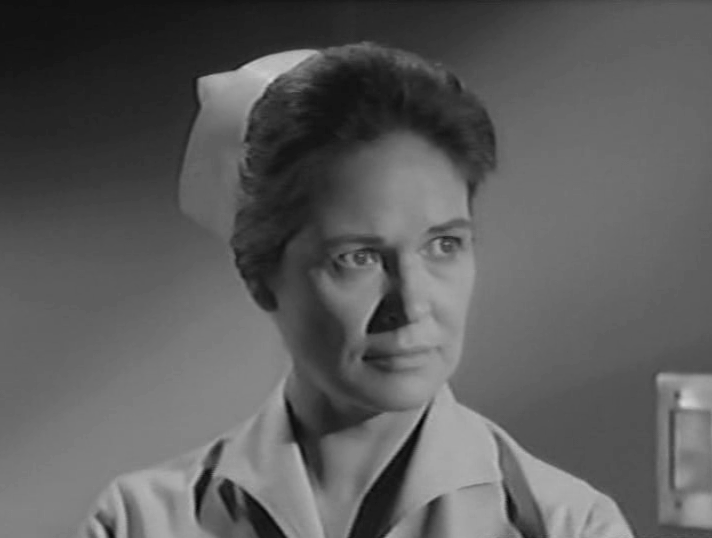
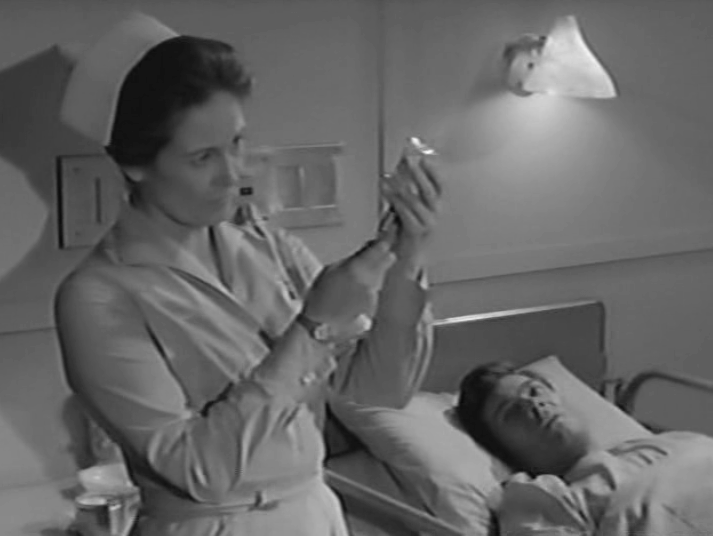
“An Unlocked Window” (1965) is one of the most starkly intense and transgressive in nature of The Alfred Hitchcock Hour and won an Edgar Award for James Bridges writing in 1966. The episode stars Dana Wynter and Louise Latham, both wonderful, unsung actresses!

CapturFiles_26
Dana Wynter and T.C. Jones in An Unlocked Window–nurses in peril, oh my!
CapturFiles_22
Louise Latham in An Unlocked Window

THE ACTRESSES– Martha Hyer, Vera Miles, Patricia Breslin, Angie Dickinson, Carol Lynley, Carmen Phillips, Isobel Elsom, Charity Grace, Susan Oliver, Kathleen Nolan, Peggy McCay, Adele Mara, Lola Albright, Dee Hartford, Gena Rowlands, Jayne Mansfield, Dina Merrill, Patricia Collinge, Jan Sterling, Elizabeth Allen, Anne Francis, Ruth Roman, Gladys Cooper, Inger Stevens, Zohra Lampert, Diana Hyland, Joan Fontaine, Irene Tedrow, Sarah Marshall, Nancy Kelly, Betty Field, Katherine Squire, Martine Bartlett, Phyllis Thaxter, Natalie Trundy, Linda Christian, Laraine Day, Anna Lee, Lois Nettleton, Madlyn Rhue, Patricia Donahue, Diana Dors, Claire Griswold, Mary LaRoche, Virginia Gregg, Anne Baxter, Jacqueline Scott, Sondra Blake, Ruth McDevitt, Katharine Ross, Patricia Barry, Jane Withers, Joyce Jameson, Teresa Wright, Linda Lawson, Jean Hale, Mildred Dunnock, Felicia Farr, Kim Hunter, Collin Wilcox, Jane Darwell, Jocelyn Brando, Joan Hackett, Gloria Swanson, Lynn Loring, Pat Crowley, Juanita Moore, Naomi Stevens, Marjorie Bennett, Jessica Walter, Gia Scala, Joanna Moore, Kathie Browne, Ethel Griffies, Sharon Farrell, Nancy Kovack, Barbara Barrie, Doris Lloyd, Lillian Gish, Maggie McNamara, Josie Lloyd, Tisha Sterling, Ann Sothern, Patricia Medina, Elsa Lanchester, Jeannette Nolan, Ellen Corby, Julie London, Margaret Leighton, Lilia Skala, Olive Deering, Kathryn Hays, Dana Wynter, Louise Latham, Sally Kellerman, Geraldine Fitzgerald, Fay Bainter, Jane Wyatt, June Lockhart, Colleen Dewhurst…

MY SELECTED EPISODES THAT FEATURE THE HITCHCOCK LADIES OF THE EVENING!….

DON’T LOOK BEHIND YOU (9/27/62) – VERA MILES as Daphne

Vera MIles Jeffrey Hunter Don't Look Behind YOu
Vera Miles as Daphne and devilishly handsome Jeff Hunter in Don’t Look Behind You
CapturFiles_1
Fear grips the campus and Vera Miles… Abraham Sofaer watches Daphne go out into the dangerous night woods

Directed by John Brahm, written by Barré Lyndon (The War of the Worlds 1953) Based on Samuel Rogers novel co-stars Jeffrey Hunter, Abraham Sofaer, Dick Sargent, Alf Kjellin, Mary Scott, Madge Kennedy.

A small college campus is gripped by fear when a maniac is on the loose. Two young female students are slaughtered while walking home through the surrounding nefarious nighttime woods. All eyes are on several members of the faculty, though the police have no clues to go on. Alf Kjellin plays Edwin Volck, an intense pianist/composer who seems very tightly wound, especially around women. Handsome Jeffrey Hunter is Harold, the psychology professor who dabbles in abnormal behavior. Harold convinces his fiancée Daphne (the lovely Vera Miles) to act as bait to lure the killer out. Vera Miles is always possessed of a smart and inquisitive sensuality. In this episode she’s perfect as an academic who doesn’t shy from the idea of hunting a serial killer.

Harold-“Daphne, I know this man’s secret. I’ve studied these people, I know how they think!”

Daphne-“It’s frightening sometimes”¦ how you know people.”

CAPTIVE AUDIENCE (10/18/62) –ANGIE DICKINSON as Janet West

CapturFiles_1

Ed Nelson and Arnold Moss Captive Audience
Actors Ed Nelson and Arnold Moss listen to the recordings sent by the plagued Warren Barrow. Is he a murderer?
Angie and James Captive Audience
Angie Dickinson is the seductress, and James Mason is the tormented man.

This episode is directed by actor turned director Alf Kjellin, based on the teleplay by Richard Levinson and William Link of Columbo! from a story by John Bingham.

James Mason plays mystery writer Warren Barrow a pseudonym he uses to contact his publisher with a series of tape recordings describing what is either the outline for his latest murder mystery or the details of an actual murder he himself is planning to commit. Barrow describes a relationship with an alluring woman named Janet West (the sexy Angie Dickinson) who wants Warren to kill her husband so they can be together. Ed Nelson plays another writer Tom Keller whom the publisher Victor Hartman (Arnold Moss) asks to review the tapes with him in order to help determine whether the impending murder is real or fictional. Angie Dickinson is so perfect as Janet West, the femme fatale Warren Barrow can’t resist.

Janet West- “You know there’s one part of the Bible I know by heart. I saw unto the sun, that the race is not too swift nor the battle too strong, but time and chance happen to them all. Means you can be as clever as you like but you gotta have luck. You gotta work for it and grab it when it comes. I was very poor when I was young. Very poor.”

FINAL VOW (10/25/62) –CAROL LYNLEY as Sister Pamela

CapturFiles_2 Oh sister not tears again... you've cried a whole river these past weeks
“Oh sister, not tears again… you’ve cried a whole river these past weeks”-Sister Jem

CapturFiles_15

Directed by Norman Lloyd, story and teleplay by mystery writer Henry Slesar (Alfred Hitchcock Presents, The Twilight Zone, Two on a Guillotine 1965, The Man From U.N.C.L.E. 1966, Batman 1966, Run For Your Life ’66-67 Circle of Fear 1972, McMillan & Wife 1974, Tales of the Unexpected 1981-1984) co-starring Clu Gulager  Isobel Elsom Carmine Phillips, Charity Grace.

Carol Lynley is Sister Pamela who on the eve of taking her final vows has a crisis of faith. Sister Pamela fears that she might just be hiding from the world. The Reverend Mother (Isobel Elsom) sends Pamela and Sister Jem (Charity Grace) on a mission to collect a valuable statue of Saint Francis that is being donated to the convent by reformed gangster William Downey (R.G. Armstrong).

On the way back to the convent, the lovely young novice is fooled by slick hoodlum/loser Jimmy Bresson (Clu Galager, who is terrific at being smarmy), who stalks train stations stealing bags. Pamela is filled with guilt for having let down her dying mentor, Sister Lydia (Sara Taft). She leaves the order and submerges herself in the sleazy jungle where Jimmy works and socializes in order to find the statue and redeem herself. Lynley is another underrated actress who delivers an extremely poignant performance as a girl at the crossroads of her life. She has an endearing, innocent beauty that is genuine and charismatic.

Sister Pamela-“Sorry, Sister Jem, I have only myself to blame.”

Sister Jem-“You’re not thinking of… what we spoke of the other day?”

Sister Pamela-“I haven’t been thinking of anything Sister. I’ve tried not to think.”

Sister Jem-“Have you prayed?”

Sister Pamela-“Sister… I’ve prayed for humility and obedience. But there was no answer in my heart Sister Jem… only silence!

ANNABEL (11/1/62)– SUSAN OLIVER as Annabel Delaney

Dean Stockwell and Susan Oliver in Annabel
“You’ve been pretending so long… You don’t know what’s real and what isn’t”-Annabel

CapturFiles

CapturFiles_1
Annabel-“David, what is my picture doing here? David, who lives here?”

Directed by Paul Henreid, written by Robert Bloch, novel by Patricia Highsmith (she wrote the original story for Hitchcock’s Strangers on a Train, 1951), costarring Dean Stockwell, Kathleen Nolan, Gary Cockrell, Hank Brandt, Bert Remsen.

Dense-browed Dean Stockwell plays research chemist David Kelsey, who is hopelessly in love and obsessively fixated on Annabel (the wonderful Susan Oliver). But Annabel is married Gerald Delaney (Hank Brandt) Kelsey assumes a phony identity William Newmaster and pursues Annabel with a blind devotion that is downright creepy. He purchases a beautiful home that he has filled like a shrine to his great love, a place tucked away in the country where they can sojourn in their own private world. The trouble is, Annabel isn’t in on the romance. But David isn’t taking no for an answer. Added to the web of obsessive love is the fact that Linda Brennan (Kathleen Nolan) is as fixated on David as he is on Annabel. What a mess!

BONFIRE (12/13/62)–DINA MERRILL as Nora & PATRICIA COLLINGE as Naomi Freshwater

CapturFiles_2

CapturFiles_3

CapturFiles_23

Directed by Joseph Pevney teleplay William D Gordon and Alfred Hayes based on a story by V.S.Pritchett as published in The New Yorker and co-starring Peter Falk in one of his most impressive roles as the psychotic revivalist Robert Evans.

Falk plays a fire-and-brimstone fanatic who yearns for his own church and will kill in order to achieve his life’s dream. First he woos Patricia Collinge (The Little Foxes 1941, Shadow of a Doubt 1943, The Nuns Story 1959) as the wealthy Naomi Freshwater, murdering her one night in order to take over her large house he claims she promised to him in order to help him build his tabernacle. The scene is quite disturbing and fierce. a well done scene that predates many psycho-sexual narratives to follow.

When her niece, the world traveling Laura (Dina Merrill) comes to get her aunts things in order, Robert begins to romance her with the same bombastic fervor as he did her aunt Naomi. As Robert discloses his past to Laura, she discovers that he might have killed his first wife as well and that he has visions of his calling to be a great evangelist. Evans is a deranged ego-maniacal woman hater who mistakes his visions of glory for the need to be in control!

Robbie-“Sure the whole world is filled with problems Miss Naomi. We’ve all got to puzzle over what we’re supposed to think. None of us. There’s nobody that’s gotta puzzle over what we’re supposed to do!”

Naomi-“Oh that’s so clear to me Robbie, you know what to do and you do it… I feel so free! No more aches and pains.”

CapturFiles_2
Robert- “Burn it… Burn it. Take your whole past and burn it out there in that fire pit. Start a new life with me” Laura- “I don’t have your faith in new lives Robert.” Robert-“But I told you once… I’ve got the faith.”

WHAT REALLY HAPPENED (1/11/63)– ANN FRANCIS as Eve Raydon & RUTH ROMAN as Addie

CapturFiles_4

CapturFiles_28

CapturFiles_6 copy 2

CapturFiles_4
Mrs Raydon (Gladys Cooper): “I think he’s dead, you’ve always wanted this to happen. You’ve done this to him. You’ve killed him!”

CapturFiles_27

CapturFiles_30

Directed by Jack Smight with a teleplay by Henry Slesar, based on the story by Mary Belloc Lowndes who wrote the novelette The Lodger, which was the inspiration for Hitchcock’s first suspense film in 1927 and of course the version with Jack Palance in 1953 called The Man in the Attic. 

One of my favorite episodes due to the presence of Ann Francis as Eve Raydon and Ruth Roman as her companion, Adelaide ‘Addie’ Strain. Eve is framed as a jezebel by her nasty vicious old mother in law. The storyline has a definite undertone of lesbian desire, akin to Lillian Hellman’s A Children’s Hour. Eve is married to a stuffed shirt named Howard ( Gene Lyons–the commissioner -Ironside) who resents Addie’s presence and is still tied to his mommy’s (the great Gladys Cooper Rebecca 1940, Now, Voyager 1942, The Song of Bernadette 1943) apron strings. Howard fires Addie, who has been hanging around Eve in the position of ‘maid’, who also happens to have a little boy named Gilly, who breaks a valuable antique, sending Howard into a rage and prompting him to fire her. Addie is desperate to stay with her mistress and poisons Howard’s nighttime glass of milk by spiking it with some K9 liniment. But Eve is accused of the murder instead and her intolerable mother-in-law is all too happy to see her pay for the crime. co-starring Michael Strong as defense attorney Malloy, Stephen Dunn as Jack Wentworth, and Tim O’Connor as Prosecutor Halstead.

Addy talks to Eve about Howard finally firing her-“He means it this time… things could have been so different!”

Addy Strain to Molloy- “I can’t believe that all this is happening, it’s all that woman’s fault. That awful old woman, Mrs Raydon. She hates Eve. She’s always hated her. She hates Eve just because she married her son. That’s why she accused Eve of killing him.”

A TANGLED WEB (1/25/63)– ZOHRA LAMPERT as Marie

CapturFiles_2

CapturFiles_5

I heard you David. You're going to marry the maid. At least this afternoon you're going to marry the maid. My wedding present to you will be my absence%22
Gertrude Flynn as Ethel Chesterman, “I heard you, David. You’re going to marry the maid. At least this afternoon, you’re going to marry the maid. My wedding present to you will be my absence.”

CapturFiles_6

CapturFiles_7
Marie-“Your eyes shine in the dark, David. I think you are part Cat”. David –“A tiger, a leopard, ready to pounce.” Marie-“I’m going to have to get a wonderful cage to put you in.” David-“Nobody is going to put me in a cage!! Marie-“Stop, David, you’re hurting me…”

Directed by Alf Kjellin, with a teleplay by writer/director James Bridges (When Michael Calls 1972, The China Syndrome 1979) based on a story by Nicholas Blake.

Zohra Lampert plays Marie, a naïve French maid who runs off with the wealthy son, David (Robert Redford), who is actually a compulsive cat burglar/jewel thief. David’s wealthy mother throws a few coins at them to buy a toaster, goes to Europe, and changes the locks on the door. And so for money David runs to his partner in crime Karl. And so begins a queer struggle with David’s odd accomplice, a flamboyant wig designer Karl Gault played to the hilt by Barry Morse.

David cannot change the way he is, although he is truly in love with Marie, he only knows how to steal and scheme. Karl falls in love with Marie, creating the immortal triangle. In order to get his rival out of the way, Karl creates an elaborate ruse in order to trap David in a robbery gone wrong and have him arrested for the murder of a guard. Co-starring Gertrude Flynn as David’s mother, Ethel Chesterman.

Marie-“Your eyes shine in the dark, David… I think you are part cat.”

THE PARAGON (2/8/63) – JOAN FONTAINE as Alice Pemberton

CapturFiles_2

CapturFiles_1a

CapturFiles
John-“Alice have you ever read any fairy tales? There’s one about a princess. She was very beautiful. She lived in a beautiful castle. Had a beautiful garden. But her fairy godmother warned her not to do one thing. There was a particular flower in that garden that she wasn’t to pick. If she did,  she’d lose everything. Her beauty, her castle,  everything. Alice– “I don’t get the point”. John –“Alice princess, don’t touch that flower please” Alice- “oh please don’t be silly they only write fairy stories to keep children out of mischief.”

Directed by Jack Smight with a teleplay by Alfred Hayes and a story by Rebecca West. The Paragon allows screen legend Joan Fontaine to give what I feel is perhaps one of the most extraordinary performances of her career. As the infuriating perfectionist who meddles in everyone’s lives Alice Pemberton married to the beaten down John Pemberton played by the always wonderful Gary Merrill.

John loves his wife but is beginning to feel the strain from years of Alice’s intruding and dictating moral codes and her ideals to anyone within reach, even the maid Ethel, played with fabulous scorn by Irene Tedrow. All her friends and relatives cringe at the sight of Alice, for they know she will inject some sort of righteous advice and admonition. Alice is like a child who cannot see the damage she has done or how she hurts the people around her. She believes that she is helping to improve themselves, though she alienates herself instead. John urges with a tender yet firm clues that she must stop her behavior before it’s too late. Even relating a fairy tale to her with a warning… Alice is very much like a character in a fable who does not heed the warnings or the signs that she is tempting the shadows to converge upon her!

THE LONELY HOURS (3/8/63)– NANCY KELLY as Mrs. J. A. Williams / Vera Brandon & GENA ROWLANDS as Louise Henderson

CapturFiles_5

CapturFiles_3
Vera-“Michael and I are leaving now, Mrs Henderson, I’m taking him home with me. Oh, I am sorry for you because I think in your own way, you’ve grown really fond of my baby. But you see, Michael is my child. I’ve known that from the very beginning.”

CapturFiles_2

Directed by Jack Smight with a teleplay by William D Gordon based on a story by Celia Fremlin.

Louise (Gena Rowlands) is a busy mother of two precocious young girls, Jennifer Gillespie (What Ever Happened to Baby Jane? young Jane) and a small infant boy. She rents the room upstairs to the mysterious Vera Bradley (Nancy Kelly), who is supposedly working on her thesis paper, but in fact has her eyes on Louise’s baby boy. She secrets him off each day to another room she is renting, that she has decorated for the little guy. She also calls him Michael. The child looks more like Vera as he has dark curly hair, and both Louise and her husband are blonde. Is Vera there to steal the boy and claim him as her own? This is an extremely taut and well-acted little story. The performances by both Kelly and Rowlands are stellar. The interplay between the two women brought me to tears; it was so poignantly played without being melodramatic or contrived. A truly heart-wrenching experience, especially for fans of these fine actresses, as well as one of the most effectively dramatic of all the episodes. Also watch for an appearance by the wonderful Juanita Moore as Mrs. McFarland and Joyce Van Patten as best friend Grace.

THE STAR JUROR (3/15/63) BETTY FIELD as Jenny Davies

CapturFiles_3
Dean Jagger tries to quiet Jennifer West after he tries to steal more than a kiss from the town hussy Alice.
CapturFiles_4
Betty Field plays George’s flakey nagging wife.
CapturFiles
Slamming the fridge door and shuffling her feet. Jenny confronts George’s peculiar behavior on the jury Jenny – “Would the star juror care to give me some justification for his behavior? George- “What behavior?”  Jenny-” What behavior! The behavior that has brought down ridicule and scandal over our heads!” George-” What you talkin’ bout Jenny? Jenny- “Have you gone deaf and blind?… Unplug your ears… open your eyes! George Davies, the most respected highly thought-of citizen in this town protecting this infidel, this murderer… No wonder you get indigestion.”

Directed by Herschel Daugherty with a teleplay by James Bridges and a story by Francis Didelot

Although this is very much Dean Jagger’s vehicle, Betty Field, who is a wonderful actress, stands out as the blowsy, whiney wife to George Davies, who becomes so aroused by the town hussy Alice (Jennifer West) while out at the lake during a picnic. When she rebuffs his advances, he strangles her and allows her boyfriend, JJ Fenton (Will Hutchins), to take the rap for her murder. JJ has been known to knock Alice around, and soon the town is out for his blood. But the guilt of what he has done drives George to try and defend JJ to exasperating results. This is a quirky, dark, comedic episode that just seems to want to be kind to George. The show also co-stars Martine Bartlett as Flossie and the wonderful Crahan Denton as Sheriff Walter Watson, who just won’t take George’s confessions seriously.

THE LONG SILENCE (3/22/63)- PHYLLIS THAXTER as Nora Cory Manson

CapturFiles_6

CapturFiles_8
Nora’s inner monologue- “In heaven’s name, Jean, don’t leave us here alone.”

Directed by Robert Douglas with a teleplay by William D. Gordon & Charles Beaumont based on a story by Hilda Lawrence.

Michael Rennie plays a con man, Ralph Manson, who marries Nora (Phyllis Thaxter) for her money. When he screws up an elaborate scheme to embezzle funds from the bank, trying to pin it on her eldest son, he accidentally kills the boy. While trying to make it look like the young man hangs himself, Nora stumbles into this horrific deed, she winds up taking a fall down the stairs that paralyzes her and leaves her in an apparent catatonic state, which is good for Ralph, as he needs this witness to be silent. But Nora might not stay silent for long… The well-crafted suspense yarn utilizes Nora’s inner monologue to help guide us through the tense narrative cues. This is such a tautly played suspense piece as Nora is conscious of her husband’s murderous nature, and his desperation to keep Nora quiet. It’s only a matter of time before he finds a way of making it look like she dies of natural causes. Enter the pretty Natalie Trundy as her attending nurse Jean Dekker, who senses something is wrong and stays close by! This one’s a nail-biter!

THE DARK POOL – (5/3/63) LOIS NETTLETON as Dianne Castillejo & MADLYN RHUE as Consuela Sandino

CapturFiles_5
Dianne-“Oh Nanny it’s wrong, I didn’t think he’d blame you” Nanny-“The important thing is that he isn’t blaming you” Dianne–“Oh I’m letting you be hurt and I can’t do that.. I didn’t think he’d react this way. Nanny I”m going to tell him the truth” Nanny-“What are ya going to tell him. That you were with the baby holding a drink!” Dianne-“But you’re not the guilty one, he mustn’t blame you Nanny-“Dear in the past when things went badly you know what happened. You don’t want that now. You promised him that you’d give it up. Oh, when the baby was here it was better” but better’s not what you promised!”
CapturFiles_1
Lois Nettleton as Dianne and Doris Lloyd as Nurse Andrina Gibbs

CapturFiles_3

CapturFiles_2
Consuela- “She feels guilty, she feels responsible for the baby’s death. And the drinking helps her to forget. So we’ll see that she continues to drink. And when the bottle is all gone. We’ll get more Vodka. Or whiskey or whatever she likes. She can hide it from Victor for a while, I suppose. But he will find out, and then he’ll be terribly hurt. and disappointed in her. He’ll need help and sympathy from someone else!”

Directed by Jack Smight with a teleplay by Alec Coppel and William D. Gordon, based on a story by William D. Gordon.

Lois Nettleton plays Dianne Castillejo, who adopts a little boy, who drowns in their swimming pool while she is sitting out in the sun with a cocktail. Dianne is a recovering alcoholic, and there is a question as to whether she was intoxicated when the tragic accident occurred. Dianne is visited by a mysterious woman, (Madlyn Rhue) Consuela Sandino, who claims to be the little boy’s birth mother. She proceeds to blackmail Dianne about the circumstances of the little boy’s death. She convinces Dianne to allow her to stay in the house as a guest, being an old-school friend. Here, she plans on helping Dianne submerge herself in booze so she’ll pay out loads of money and eventually have to be taken away to a sanatorium where she can then work on the handsome (Anthony George) Victor. Co-starring Doris Lloyd as Nanny. 

RUN FOR DOOM 5/17/63 DIANA DORS as Nickie Carole

CapturFiles_5

CapturFiles_4
John Gavin as Dr. Don Reed and Tom Skerritt as friend Dr. Frank Farmer… Don is just smitten.
CapturFiles_2
Scott Brady as Nickie’s boyfriend, Bill, stands by her
CapturFiles_1
Nickie-singing Just One of Those Things-“So goodbye dear and amen” Bill- “Where you going?” Nickie-“Maybe California. You know I came back just to have a look at you. You got really weak eyes Bill. Here’s hoping we meet now and then.” Bill- “But you haven’t asked me to come along.” “Nickie-“Well I came here thinking I’d have to, but I don’t need you anymore the boomerang’s broken baby’ Bill-“You wanna bet!” Nickie “Uhuh, It was great fun, but it was just one of those things.”

CapturFiles_3

Directed by Bernard Girard with a teleplay by James Bridges and a story by Henry Kane.

Doctor Don Reed (John Gavin) falls head over heels for a sexy nightclub singer, the slinky Nickie Carole (Diana Dors), who is just no good. Both his father and Nickie’s own band leader boyfriend try to warn Don. Nickie accepts Don’s proposal of marriage, and then his father drops dead after hearing the news. The newlyweds use the inheritance money to take a honeymoon cruise, in which Don stumbles upon his bride getting all snuggly with another passenger. In a rage, Don causes the man to fall overboard. Of course, Nickie urges Don to keep his mouth shut. And he is now a murderer. Soon after Nickie grows tired of Don, as her old lover Bill warned would happen, and this hard-edged old boyfriend (Scott Brady), Bill Floyd of the Bill Floyd Trio, shows up in the picture again… What will happen to this dangerous triangle of lust and obsession…

THE SECOND SEASON!

A HOME AWAY FROM HOME (9/27/63) CLAIRE GRISWOLD as Natalie Rivers

CapturFiles_2
Natalie-“I understand, they’re patients aren’t they? Permissive therapy?” Dr. Fennick-“Yes, that’s it exactly. A new method, an experiment. I wanted to prove that my patients would act normally if treated like normal human beings.”

CapturFiles_8

CapturFiles_2
Sarah-“Oh, I feel fine, doctor, just fine. I always feel fine talking to you.” Dr. Fennick-“That’s what I’m here for’ Sarah-“Yes, I know but… what am I here for? Beatrice Kay as Sarah Sanders, the aging film star.
CapturFiles_1
Inmates Virginia Gregg as Miss Gibson and Ronald Long as The Major
CapturFiles_3
The real doctors are locked up in the attic!
CapturFiles_5
The deranged Ray Milland as Dr. Fennick who menaces Natalie (Claire Griswold ) in Home Away from Home- The Alfred Hitchcock Hour

CapturFiles_9

CapturFiles_1
Virginia Gregg as Miss Gibson-“The doctors told everyone about you. I know they’re just CRAZY to meet you!!!”

Directed by Herschel Daugherty with a teleplay based on his story by Robert Bloch from Alfred Hitchcock’s Mystery Magazine.

This is one of those great ‘the inmates have taken over the Asylum’ narratives starring Ray Milland. Milland plays Dr. Fenwick, a mentally disturbed doctor who believes in role-playing as a therapeutic means to unlocking a patient’s identity crisis and finding happiness. After he kills the director of the sanitarium, he assumes his identity, of course. He locks away the staff in the attic and allows the inmates to pick roles that would suit their desires. Things are going pretty well until the director’s niece, Claire, shows up to visit her uncle. At least she has never seen her uncle before so she quickly assumes that Milland is who he says he is. Unfortunately, Claire discovers the dead body of her real uncle and urges Fennick to call the police. Uh oh! What mayhem will ensue.

There are great little parts by Virginia Gregg as Miss Gibson roleplaying the nurse, Connie Gilchrist as Martha, Mary La Roche as Ruth… and Beatrice Kay as Sarah Sanders!

A NICE TOUCH 10/4/63  ANNE BAXTER as Janice Brandt

CapturFiles
That’s actor Harry Townes lying dead under that shiny star pillow…

CapturFiles_6 copy 6

CapturFiles_5
Janice referring to Larry (George Segal) –“He’s the kind of man who could make you do anything… anything at all…”

This episode is directed by Joseph Pevney with a teleplay by Mann Rubin

George Segal plays the young, ambitious actor who wins over casting agent Anne Baxter as Janice Brandt. Janice falls deeply in love with Larry, the cocky and short-tempered actor with whom she gets a screen test in Hollywood and turns him into an upcoming male lead.

She has given up everything for this strong-willed actor, including her career, and even sacrificed her marriage.

While back in New York, Janice calls Larry desperately, telling him that her ex-husband Ed (Harry Townes) has tracked her down completely drunk and is now unconscious on the floor. Larry calmly coaches Janice into finishing off the job by smothering him with a pillow, so she can finally be free and join him in Hollywood… But is that all there is to it?

TERROR AT NORTHFIELD (10/11/63) JACQUELINE SCOTT as Susan Marsh & Katherine Squire as Mrs. La Font

CapturFiles_1

CapturFiles_2

CapturFiles_4
Sheriff Will- “You can’t think of anyone at all who might have had a grudge against Frenchie?” Katherine Squire as Mrs. La Font- “Only one person, Will, Myself. He was my son, I loved him, there was no harm in him, he never hurt anyone, but he was lazy. He would not accept responsibility. That’s why he wanted me at the restaurant so I could do all the work of running it, while he’d play Frenchie La Font for the public. I used to get so angry with him. So angry… (crying)
CapturFiles_10
The creepy custodian of the library terrorized poor Susan with his tales of working the slaughterhouses.

Directed by Harvey Hart with a teleplay by Leigh Brackett, and a story by Ellery Queen

In Northfield, a rural community in northern California, a teenage boy, Tommy Cooley, is found brutally murdered. His father, R.G. Armstrong, who is a religious fanatic, goes on a mission to avenge his boy’s murder. There is only one piece of evidence, a broken-off part of the car’s headlight found at the murder scene. First, believing that he is getting signs from God, he murders Frenchie La Font (Dennis Patrick), the person who owned the car. Then the car falls into the hands of an elderly librarian who considered purchasing the car and might have had access to it. The residents of Northfield become terrorized by the events and demand that (Dick York) Sheriff Will Pearce do something about it. Jacqueline Scott who plays Susan March a librarian and the Sheriff’s girlfriend is now the one who wound up with La Font’s car. Cooley now suspects her. He is on a mission from the lord to avenge his son’s death. Will Susan be next? Co-stars Katherine Squire as Mrs.La Font, who turns out a tremendous performance as the mother of a good-for-nothing son who winds up being the victim of Cooley’s wrath.

THE DIVIDING WALL (12/6/63) KATHARINE ROSS as Carol Brandt

CapturFiles_4 copy 6

CapturFiles_6

CapturFiles_3

CapturFiles_6

CapturFiles_7
Carol-“You don’t talk much do you?” Terry-“I guess not.” Carol –“Is the rest of your family like that? Quiet I mean?” Terry- I don’t know. I don’t even know who they were. I was raised in a county home” Carol- “You mean like an Orphanage? Terry “Now what else could it mean? I’m sorry, maybe we oughta start back, it’s a long way. ” Carol -“We can take the subway.” Terry -“I wanna walk, you wanna take the subway? Go ahead if that’s the way you feel about it.”  “Carol-“Why did you come with me?” Terry– “I didn’t mean it like that. It’s just that it’s the rush hour now. Look, I gotta thing about being closed up in places is all.” Carol- “Claustrophobia?” Terry “Yeah” Carol- “So does Mr. Calucci. He was a prisoner of war.” Terry– “I was a prisoner once… No war though.” Carol –“You mean the home.” Terry-“Home reformatory, state prison, take your pick. Anything else you’d like to know? Carol– “Some date huh?” Terry-Bet you don’t have any boyfriends like me.” Carol- “I don’t have any boyfriends”Terry– “Come on” Carol- “I haven’t dated since high school.” Terry- “Girl like you why not?” Carol-“What do you know about me?” Terry “I could learn.”

Directed by Bernard Girard  (Dead Heat on a Merry-Go-Round 1966, The Mad Room 1969) with a teleplay by Joel Murcott based on a story by George Bellak.

Three paroled ex-convicts stage a heist but inadvertently unleash radioactive cobalt on a small urban city street. Actors Chris Robinson, Norman Fell, and James Gregory, who are now garage mechanics, decide to rob the payroll office. When they can’t crack open the safe, they take it to their garage, which is adjacent to the little shop next door run by Carol.

Terry who is acutely claustrophobic (Chris Robinson) begins a romance with Carol, as he struggles between self-preservation and his sense of humanity and love for this beautiful young woman. Katherine Ross is a particularly seductive pixie in this episode. Ross’s presence brings an element of realism and humanist equilibrium to the very nihilist tone of the story.

GOOD-BYE, GEORGE (12/13/63) PATRICIA BARRY is Lana Layne / Rosemary ‘Peaches’ Cassidy

CapturFiles_3
Lana/Peaches-“You and Snakebite are among the very few things that fail me in that respect.”

CapturFiles_1

Directed by Robert Stevens with a teleplay by William Fay and a story by Robert Arthur.

This is one of the cheeky mystery installments of the show, and Patricia Barry is just superb as the brassy dame with a secret past who’s looking out for number one. The night she wins the Oscar, movie star Lana Layne is visited by her old ex-convict husband George (Stubby Kaye), who, she thought, had died in a prison fight. Rosemary ‘Peaches’ Cassidy had married the bum when she was only seventeen and didn’t know any better. But George has plans of letting Lana remain his wife since she’s so successful and wealthy, and if they did get divorced, she’d owe him half of anything that was hers. She wants to marry handsome manager Harry Lawrence (Robert Culp). Lana clocks George on the head and accidentally kills him. Now Lana and Harry must try to hide the body while finding a place to have their honeymoon, assailed by gossip columnist Baila French (Alice Pearce- Bewitched’s neurotic neighbor Gladys Kravitz). It’s a comedy of errors!

HOW TO GET RID OF YOUR WIFE (12/20/63) JANE WITHERS as Edith Swinney

CapturFiles_5

CapturFiles_2
Rosie, “You’ve had a narrow escape. Well, life’s given you another chance. And you should take it”¦ You should free yourself. When something’s over, it’s over.” The always delightful Joyce Jameson as Rosie Feather, the ‘dancer.’

Directed by Alf Kjellin story and teleplay by Robert Gould

Withers plays Edith Swinney, the consummate nagging harpy who dominates her husband Gerald’s (Bob Newhart) mundane life. Gerald concocts a very elaborate plan to drive Edith mad, using paranoia as he digs a grave-like hole for a fish tank, leaving empty boxes of rat poison around the kitchen. Edith is so convinced that Gerald is out to kill her that she shares her fears with her friends and neighbors. Gerald purchases a pair of rats from a pet shop and plants them in the kitchen. She falls for the bait and puts rat poisoning in his cocoa, making it look like murder made to look like suicide. She calls the police the next morning, but they find a very alive Gerald. Edith is arrested for attempted murder… but is that the end of the story? Joyce Jameson stars as dancer Rosie Feather, always fabulous, perhaps playing the featherbrained blonde bombshell– but always endearing!

THREE WIVES TOO MANY (1/3/64) TERESA WRIGHT as Marion Brown

CapturFiles

You been a bigamist 4 times. Now you can stay alive with me or be dead away from me
Marion Brown tells her husband, “You have been a bigamist 4 times. Now you can stay alive with me or be dead away from me!”

Directed by Joseph Newman with a teleplay by Arthur Ross and a story by Kenneth Fearing.

Dan Duryea is a gambler and a proud bigamist named Raymond Brown. He truly loves his wife… I mean all four of them. But something is going quite wrong. One by one, his wealthy meal tickets are all turning up dead. At first, it appears that they are suicides. But the police start to suspect Brown of murder. Marion (Teresa Wright) has been the long-time dutiful wife who has waited and suffered through heartache to finally have her philandering husband all to herself. Could she be the one who is bumping off all of Ray’s wives? Wright takes a much different approach from the gentle farm wife Stella and shows herself off to be quite resourceful when holding onto a cheating husband!

BEYOND THE SEA OF DEATH (1/24/64/) DIANA HYLAND as Grace Renford & MILDRED DUNNOCK as Minnie Briggs

CapturFiles_1
Grace Renford sarcastically confronts her aunt- “All men are rotten, aren’t they, Minnie? As soon as they’re interested in me, they’re no good!”

CapturFiles_2

CapturFiles_5
Aunt Minnie-“If he’s a doctor at all he should be giving out pills not talking to dead people!”

Directed by Alf Kjellin with a teleplay by Alfred Hayes and William Gordon. Story by Miriam Allen de Ford.

Grace Renford (the haunting Diana Hyland) plays a wealthy and beautiful socialite who longs to meet the man of her dreams. Someone who will love her for who she is and not the money and status that is her legacy. The lonely Grace answers an ad in a spiritualist magazine where she begins to correspond with a young man named Keith Holloway (Jeremy Slate).

He is an engineer who does his work in Bolivia, or so he says. When he comes to the States to meet Grace for the first time, she has rented a modest apartment and pretends that she is just an ordinary working-class girl. Minnie (Mildred Dunnock) acts as guardian to the lost waif and knows something isn’t quite right with this man. But when Grace and Keith get engaged, she tells him about her true identity. Keith insists that he is not interested in her money and that he has his own business ventures in Bolivia. Keith returns to South America, planning on having Grace join him soon. But Grace gets a telegram saying that he has been killed in a mining accident.

Sent into the world of spreading grief, Grace turns to spiritualism and mysticism to find a way to contact her lost love. Thus, Dr.Shankara (Abraham Sofaer) appears, who can connect Grace with her dead love. Wanting to shed her worldly goods, she gives away her possessions to the doctor and his temple. But Minnie suspects that Keith is very much alive and that a scam has been going on with the doctor for years. Minnie tries to intervene with disastrous results!

NIGHT CALLER (1/31/64) FELICIA FARR as Marcia Fowler

CapturFiles

CapturFiles_1

CapturFiles
Roy- “A string of men friends all the time Mrs. Fowler, a string of men friends, a string of men friends all the time ssh don’t tell anybody Roy this is your Uncle Joe from Kokomo Roy, why don’t you go outside in the yard for a little Roy huh!  {} There’s a smell of death around women like you. Death and corruption. You corrupt people the way you go on all the time. So you better cut it out you understand that” Marcia Fowler-“Get away from me you’re out of your mind. Nobody would blame me now if I shot you now with your filthy phone calls, breaking in here like this. How exciting am I now with a gun pointing at you?”

Directed by Alf Kjellin with a teleplay by Robert Westerby & Gabrielle Upton based on Upton’s story.

Felicia Farr  plays the sexy Marcia Fowler, who accuses the neighborhood thug Roy Bullock (Bruce Dern) of not only playing peeping tom but sexually harassing her. Roy is a tightly wound teen filled with angst and rage, and could possibly be a psychopath while we’re at it. He denies it when confronted by Marcia’s husband. (David White)

Marcia does appear to be self-absorbed, neglecting to pay enough attention to her stepson. But when the obscene phone calls begin, Marcia convinces her hubby to confront Roy about it, who tells him she’s just looking for attention. When Roy Fowler goes away on a business trip, he challenges Marcia, calling her a tease and a lousy wife and mother, the way his own mother had failed. Okay, so the angry boy has mother issues. Things get out of hand when Marcia begins to feel threatened and takes out a gun. But is everything as it seems?

THE EVIL OF ADELAIDE WINTERS (2/7/64)– KIM HUNTER as Adelaide Winters

CapturFiles

Directed by Laslo Benedek with a story and teleplay by Arthur Ross

Kim Hunter is stunning as a ruthless woman who has no conscience and borders on the sociopathic. At the end of WWII, Adelaide exploits the grief and loss of surviving members of the family to act as a spiritual medium. She earns a nice living by taking money from these grieving people, claiming to ease their suffering by connecting them with their lost loved ones. Gene Lyons plays Adelaide’s bunko buddy Robert who helps set up the patsies for the taking.

There is nothing more heinous than bilking grieving families of soldiers killed in battle out of their money, pretending that she can communicate with them.

Enter the wealthy widower Edward Porter (John Larkin), who has just lost his son in the war. Adelaide convinces him to join her in a Séance. Desperately lonely and longing for his son’s return, Edward begins to come around and embrace Adelaide’s powers. Edward has also fallen in love with Adelaide and wishes the three of them to be together…!

CapturFiles_4
Robert (Gene Lyons) “I taught you everything there is to know about this racket.” Adelaide “Profession Robert.” Robert – “That’s what you’d like to pretend, but it is a racket, a swindle a con game as any I ever did.” Adelaide-” I only obtain the more crude aspects of the profession from you.” Robert-“Everything and I want you to stop pushing me around.” Adelaide-“You taught me a series of Halloween tricks. Carnival mumbo jumbo… I made it pay.” Robert –“They’re still carny tricks.” Adelaide-“Science!” Robert- ‘And you took them from me…”

BEAST IN VIEW 3/20/64– JOAN HACKETT as Helen Clarvoe

CapturFiles

CapturFiles

Directed by Joseph Newman with a teleplay by James Bridges and a story by Margaret Millar (Rose’s Last Summer-Boris Karloff’s Thriller starring Mary Astor).

Joan Hackett (The Group, 1966), a very underrated actress of the ’60s & ’70s, plays Helen Clarvoe, a woman who is being tormented by phone calls from a menacing woman named Dorothy, who is threatening her life. Kevin McCarthy is a lawyer, Paul Blackshear agrees to investigate and track the maniacal Dorothy down. The crazy woman blames Helen for the break up of her wedding engagement. Paul finds a photographer for whom Dorothy recently posed, though she has destroyed any negatives and photos of herself. Then the photographer is murdered! While in the midst of his investigation, Paul receives a frantic call from Helen that Dorothy has broken into her apartment and is holding her at gunpoint!

BEHIND THE LOCKED DOOR( 3/27/64)– GLORIA SWANSON as Mrs. Daniels

CapturFiles_1 copy 12

CapturFiles_1

CapturFiles_1

CapturFiles_3
Mrs. Daniels-“No, Dave… this is your home now!”

Directed by Robert Douglas with a teleplay by Henry Slesar and Joel Murcott. Story by Slesar.

When Dave Snowden (James MacArthur) and his new bride Bonnie (the lovely and underrated Lynn Loring) visit the estate owned by Bonnie’s late father, Dave finds a mysterious locked door and surmises that there must be something of value hidden there. Bonnie tells her mother (Gloria Swanson) that they’ve just been married, who instantly assumes that Dave is after her inheritance. Mrs.Daniels tries to give the young man money to go away and annul the marriage. Dave is hungry for money and gets Bonnie to go along with a plan for her to fake a suicide attempt by overdosing on sleeping pills. This, they hope, will get the mother’s sympathy. Things go badly when a childhood illness leaves Bonnie allergic to sleeping pills. The climax is stunning as the great ironic natural law of justice is served. Swanson is marvelous as always as the elegant and protective Mrs. Daniels!

THE GENTLEMAN CALLER (4/10/64) RUTH McDEVITT as Miss Emmy Wright

CapturFiles_3
Miss Emmy Rice –“I was just thinking of how awful it is when people are so mean to each other. That’s one thing when you get to be seventy five, you see clearer than anything else. How mean people are to each other.”

CapturFiles copy 14

CapturFiles

Directed by Joseph Newman with a teleplay by James Bridges and a story by Veronica Johns.

The delightful Ruth McDevitt plays Miss Emmy Wright, an elderly lady who sits in the park and is befriended by Gerald Musgrove (Roddy McDowall), who, with his wife, has just successfully robbed $100,000 but needs a good place to hide the dough ’til the heat is off.

Emmy is a known pack rat who invites the couple over to her cluttered and quirky place for many social dinners. Gerald gets the bright idea of stashing the loot inside the old, dust-covered magazines that Emmy has collected over the years. Gerald also convinces Emmy to draw up a will leaving him the beneficiary so that they can later kill her off and claim the clutter that holds their stolen cash. This is a dark comedic episode with stellar performances by both McDevitt and McDowell, playing off each other’s usual droll manner. Co-starring Juanita Moore as Mrs. Jones and Naomi Stevens as Mrs. Goldy.

THE ORDEAL OF MRS. SNOW (4/14/64) PATRICIA COLLINGE as Adelaide Snow

CapturFiles

CapturFiles_4

CapturFiles_5

Directed by Robert Stevens with a teleplay by Alvin Sargent and a story by Patrick Quentin.

Patricia Collinge is one of my favorite character actors. Here she turns in quite a moving performance as a woman trapped in a safe with time running out. And in this episode I’m particularly fond of her doting on her two Siamese cats, being a staunch advocate for cats, and someone who shares their home with let’s say a variety of pussycats, a Siamese rescue being just one of them!

In The Ordeal of Mrs. Snow, Aunt Adelaide Snow is at the mercy of her scheming niece’s husband, Bruce (Don Chastain), who is afraid that Auntie will go to the police about his check forging. While away on a weekend vacation, he locks Mrs. Snow inside the bank vault in her house, hoping she’ll suffocate and it will look like an accident. But he has also locked one of her cats inside. Thank god, because these little felines are very smart indeed. Mrs. Snow’s niece Lorna (Jessica Walter) tries to call her aunt, worried that something is wrong, not realizing what her sneaky, murderous husband has done… Don’t worry, the cats come to the rescue! Also co-starring George Macready as Adelaide’s dear friend, Hillary Prine.

THE SECOND VERDICT (5/29/64) SHARON FARRELL as Melanie Rydell

CapturFiles_2

CapturFiles_3

CapturFiles_5 copy 7

Directed by Lewis Teague with a teleplay by Alfred Hayes and a story by Henry Slesar.

Sharon Farrell plays the seductive Melanie Rydell, who doesn’t intentionally get men chasing after her. But her psychotic husband Lew Rydell (Frank Gorshin) gets off on a murder charge after Ned Murray (Martin Landau) successfully gets him an innocent verdict. To Ned’s horror, he learns that Lew is, in fact, a hot-headed, jealous nutcase who was guilty of murder and is now accusing him of going after his sexy wife. Ned is conflicted by law, but wants to bring this loaded canon to justice, but can’t get him prosecuted for the same crime twice. He solicits the help of an old gangster friend who owes him one but realizes that he has inadvertently put a hit out on the unstable Lew.

ISABEL (6/5/64) BARBARA BARRIE  is Isabel Smith

CapturFiles_1

CapturFiles_2

CapturFiles

Directed by Alf Kjellin. Teleplay by William Fay and Henry Slesar, from a story by S.B. Hough.

Again, the highly underrated Barbara Barrie, who has always given her all in any performance, notably several of The Naked City. Here she plays a very timid and unstable single woman. Isabel wrongly accuses Howard Clemens (Bradford Dillman) of sexual assault. Howard Clemens is sentenced to two years in prison for a crime he didn’t commit. Once he is released, the first thing he does is steal a large amount of money. $13,000, which is the amount he would have drawn as a salary had he not been thrown in jail.

He comes back to the same town where Isabel teaches and opens up a record shop. He purposefully manages to bump into Isabel until he finally gains her confidence. Eventually, the pair becomes engaged. While on their honeymoon, Howard tampers with the fuel ignition switch on the boat, which will cause the boat to explode. He tells Isabel to take the boat out alone. A bit later, he hears the blast and is finally satisfied that he has gotten his revenge on her at last.

BODY IN THE BARN (7/3/64) LILLIAN GISH as Bessie Carnby

CapturFiles_23

Directed by Joseph Newman (The Outcasts of Poker Flats 1952, The Human Jungle 1954, This Island Earth 1955, The Twilight Zone ’63-’64) with a teleplay by Harold Swanton and story by Margaret Manners.

I’ve written about this marvelous episode for Movie Silently’s The Gish Sisters Blogathon! Here Lillian Gish plays the sassy Bessie who lives with her daughter Camilla (Maggie McNamara) Bessie is a staple of the town, and when her handyman falls to his death because of the arrogance of her neighbor Samantha Wilkins (Patricia Cutts-The Tingler 1959) and her whipped husband Henry (Peter Lind Hayes) Bessie goes on a mission to try and bridge the feud with the couple by inviting them over for supper.

Samantha refuses to break bread with the Carnbys, but Henry starts to insinuate himself into Bessie and Camilla’s lives. One night, Henry disappears, and Bessie sees Samantha digging a hole in the barn. She accuses the woman of murder, and eventually, Samantha is executed for killing her husband. But… Henry unexpectedly returns, claiming to have been on a long sea voyage, not able to hear about his wife’s trial. Bessie suspects that Henry has staged the whole thing and begins to feel terrible guilt about what she has done. Will she be able to rectify the awful mistake she has made and bring Henry to justice?

CapturFiles_134

CapturFiles_191
Bessie-“To bring to the light of day the two lies that together make a truth. “

CapturFiles_257

SEASON 3

CHANGE OF ADDRESS (10/12/64) PHYLLIS THAXTER as Elsa Hollands

CapturFiles_2
Elsa –“There’s something wrong with this house, I lye awake at night and I can feel it. There’s is something wrong with this house Something we don’t know about.”
CapturFiles
Elsa-“That’s the girl I saw at the beach, she’s lovely.” Keith- “What I want, what I really want. What I’m sure as sitting here want, uh.” Elsa –“Keith it may be, it just very well maybe I want the same thing”. Keith-“What are you talking about baby? What you were talking about.” Elsa-“How we rid ourselves of each other”¦ and when! Me of you and you of me.”

CapturFiles_1

CapturFiles_3
Michael Blodgett and Tisha Sterling do some mod dancing in Change of Address
CapturFiles
Elsa… do you really need to go down to the basement to see what your adolescent husband wants to show you? Can’t you guess!!!!

Directed by David Friedkin with a teleplay by Morton Fine and David Friedkin and a story by Andrew Benedict.

Elsa Hollands (Phyllis Thaxter) hates the new beach house. Keith Hollands (Arthur Kennedy) refuses to grow older and chases after the local beach hottie Tisha Sterling. The house gives Elsa the chills, and it doesn’t help that Keith starts digging a hole in the basement floor that he claims is for the new boiler. Elsa and Keith keep clashing over the strain in their marriage. She just wants to go back to her old apartment, and senses something terribly wrong with the damp place.

While Keith is playing around with the young blonde beauty, Elsa contacts the ex-owner’s wife to discourage her from selling and perhaps finds out the truth about the place. When Keith can’t take Elsa’s complaints anymore, finding her an obstruction in his world of newfound vitamins, jumping jacks, young beach bunnies, hair dye, turtle necks, late nites out at the disco dancing alongside the dreamy blued-eyed Michael Blodgett, he kills her and buries her in that nice big hole he’s been digging. But will Elsa’s investigation come back to bite Keith in those awfully ugly jogging shorts?

WATER’S EDGE (10/19/64) –ANN SOTHERN as Helen Cox

CapturFiles_22

CapturFiles_29

CapturFiles
Helen-“Funny you dreaming’ about me and here we are. Life’s a big surprise.”

CapturFiles_1

CapturFiles_34

CapturFiles_35

Directed by Bernard Girard with a teleplay by Alfred Hayes and a story by the great Robert Bloch!

Rusty Connors (John Cassavetes) is newly released from prison. While in prison, his mate Mike Krause (Rayford Barnes) talks incessantly about the perfect blonde he left behind. Krause dies in prison, and so while Rusty gets out, he decides to look up this gorgeous dish that was married to his former cellmate. Krause had been in prison for robbery and murder, but neither the money nor the body of his partner has ever been found. Could Krause’s wife, Helen, know where the loot is stashed?

Rusty comes to find Helen (Ann Sothern) slinging hash at a greasy spoon, but she is far from the pin-up that Mike Krause crooned about. Still, Rusty plays up to her, thinking that she can lead him to the stolen money. The pair form a tumultuous sexual relationship, greedy to find the hidden cash. They stumble onto an abandoned boathouse infested with starving rats. The two might just turn on each other, but you’ll have to see the episode and find out for yourself! This is a macabre and gritty story by the master of the suspense genre Robert Bloch author of Psycho…

LONELY PLACE (11/15/64) TERESA WRIGHT as Stella

CapturFiles_33

CapturFiles_37
Stella “I’m scared of Jesse… You scared of him too. You scared too. talking don’t help Emery I heard you talking to Jessie in the orchard. You told him you married me to have someone to feed ya. Is that why we ain’t ever have any children?”

CapturFiles_50

CapturFiles_57

CapturFiles_59

Directed by Harvey Hart with a teleplay by Francis Gwaltney and a story by G.B Gilford

Teresa Wright is outstanding as poor Stella, married to a horrible dolt of a husband who doesn’t appreciate her. Emory (Pat Buttram is a weak and unloving bumpkin who owns a peach farm. This is a dark Americana tale about a quiet woman named Stella who suffers in silence but has a few joys, like the love of animals, in particular her little pet squirrel. One day, an ominous drifter asks if he can work the farm for a bit. Bruce Dern plays Jesse in a role that surpasses so many of the psychopaths he’s had the opportunity to play. Jesse has a particular viciousness that is spine-tingling. While he helps harvest the peach crop, he secretly torments Stella with his fondness for his sharp knife. Stella feels threatened, but her husband acts clueless, while at times we see that he is very aware of what is going on, he just chooses not to intervene out of cowardice. The episode is perhaps one of the most psychologically enthralling, and its climax will leave you breathless. The performances are absolutely stunning. Just as frightening as any modern thriller on the screen today! And Wright turns in a performance that tugs at your heart with so many levels of emotional reflection as a woman trapped by her circumstances. John F. Warren’s cinematography portrays a rural hinterland that is otherworldly and melancholy.

MISADVENTURE (12/7/64) LOLA ALBRIGHT as Eva Martin

CapturFiles_8

CapturFiles
Eva-“You crying? You are crying, Ha! What do you’ve got to cry about? If anybody’s gonna cry, it should be me. Although I must say… You are a most unusual gasman!”

Directed by Joseph Newman with a story and teleplay by Lewis Davidson.

Eva (Lola Albright) is an adulterous wife to an unsuspecting businessman (George Kennedy) who is a penny pincher, though he is quite well-to-do. One day, a mysterious stranger (Barry Nelson) manages to work his way into the house by claiming to be the gas man. He acts very peculiarly, until finally, he gets her into bed. Colin convinces Eva that it would be easy to kill her husband… This zany and interesting episode has a lot of twists so I won’t give anything away! Just watch for great performances by Nelson and, in particular, the lovely Lola Albright, who can do comedic mystery thrillers with ease!

TRIUMPH (12/14/64)– JEANETTE NOLAN as Mary Fitzgibbons

CapturFiles_1

CapturFiles_2

CapturFiles_2

CapturFiles_5
Mary-“You are a vain man.”Brother Thomas- “A minor vice.“ Mary-“There is no such thing as a minor vice.” Brother Thomas “trimming a mustache harms no one.” Mary-“It’s so difficult for you to be the kind of missionary you should be.” Brother Thomas- “I have a good reputation.” Mary-“Because I have made sure of it.” Brother Thomas–“Yes, you have.” Mary-“You begrudge me that recognition.” Brother Thomas-“I’m the first to admit it.“ Mary-“I have loved you.”

CapturFiles_4

CapturFiles_6
Mary- “I don’t know if I still do. I’ve had to forget my needs and devote myself to your work.”

Directed by Harvey Hart with a teleplay by Arthur Ross and a story by Robert Branson.

This is a particularly intense addition to The Alfred Hitchcock Hour due to the fine performances by Ed Begley and one of my favorites Jeanette Nolan. Nolan plays Mary, the enigmatic wife of a missionary medical man (Begley). The strong woman behind the man, so to speak. Begley plays Brother Thomas Fitzgibbons, who in actuality is an incompetent surgeon living in a primal world in the rugged terrain of India. Mary is ambitious and wants all the glory for herself and her weak husband. When Tom Simcox and Maggie Pierce –Brother John Sprague and his wife Lucy come to help the mission, Mary fears they will expose the truth about Brother Thomas’ work, as well as usurp their position there. Oh, what a tangled web we weave. Nolan almost reignites her Lady Macbeth with her role as the conniving and treacherous Mary Fitzgibbons– Her silver-tongued laments, as always, put her at the top of my favorite character actors!

WHERE THE WOODBINE TWINETH (1/11/65)– MARGARET LEIGHTON as Nell Snyder & JUANITA MOORE as Suse

CapturFiles_2

CapturFiles_12 would you like to meet Mingo when she comes She's not very big
“Would you like to meet Mingo when she comes? She’s not very big. She’s big enough to live in a bird cage and big enough to have a frog for a horse!”
CapturFiles_15 Do you believe me about Mingo?
“Do you believe me about Mingo?”

CapturFiles_18

CapturFiles_29
Eva-“Is it dark where daddy is?”-Nell “ I hope not. I don’t know.” Eva “Numa knows. Mingo says it’s brighter than day! They have bumble bees there too.“-Nell- “Who’s Mingo, honey?”-Eva “My best friend!”

CapturFiles_35

This is one of Alfred Hitchcock Hour’s most supernatural tales that breaks the mold of the crime/suspense drama. Along with The Sign of Satan, The Monkey’s Paw, and The Magic Shop by H.G Wells. Where the Woodbine Twineth could have fit nicely into Boris Karloff’s Thriller anthology series. A haunting tale that will stay with you for a long time. Margaret Leighton is mesmerizing as Aunt Nell, a woman who just can’t embrace her little niece’s wild, imaginative tales. I’ve recently become acquainted with Leighton’s work and have fallen in love with the actress!

Directed by Alf Kjellin with a teleplay by James Bridges and a story by Davis Grubb (who wrote Night of the Hunter, The Cheyenne Social Club, and a few short stories for Rod Serling’s Night Gallery 1971.

Leighton is marvelous as she coldly, rigidly lacks understanding of her recently orphaned niece, who talks about fey people who live under the Davenport and visit her at night. When Eva comes to live with the elderly Mississippi riverboat Captain Snyder, her grandfather, her aunt Nell just can’t break through.

Nell just believes the child to be willful and lazy, trying to blame things on her imaginary friends like Mr. Peppercorn and Mingo… Aunt Nell just can’t handle the role of caretaker to a wily and free-spirited child, and begins to crack under pressure. The conflict becomes very real when Nell challenges Eva at every turn.

When Eva (Eileen Baral) gets a wonderful Creole doll she names Numa from her riverboat King grandfather, tensions ignite and Nell comes face to face with the mystical world where the woodbine twineth. A nether region between life, death, and the realms you cannot see with the naked eye. To balance out the constant struggle between the suffering Nell and the precocious Eva is the calming and level-headed presence of Juanita Moore as Suse, who understands Eva and is more like a mother to the young girl than Nell can possibly manifest from her rigid identity.

CapturFiles_1

CapturFiles

Nell is obsessed with controlling Eva and catching her in lies. She fears the child’s freedom and resents how happy she can be. When she hears Eva chatting and playing with Numa, the doll her grandfather had given Nell, she suspects that it is a child from the neighborhood.

Eva warns that if Nell takes Numa away, Eva will have to trade places with Numa and go to dwell in “Where the Woodbine Twineth.”

But obstinate Aunt Nell defies Eva and puts Numa on top of the player piano, Eva steals Numa away and runs into the woods. Suddenly in an eerie haunting manner the player piano mysteriously starts up by itself. Nell desperately stumbles onto Eva in the backyard playing with a little black girl –they are dancing.

Nell chases the girl away, warning her to stay away but then Eva disappears. When Nell finds a doll in Numa’s box it looks exactly like a porcelain version of little Eva, Nell realizes that the magic was real and that she has lost her little niece forever to the ether world beyond the trees… A changeling in her place, never to return.

One of my all-time favorite episodes. Just effectively creepy yet magical stuff… with a haunting quality that lingers…

FINAL PERFORMANCE (1/18/65) SHARON FARRELL as Rosie

CapturFiles_2

CapturFiles_14

CapturFiles_22

CapturFiles_19

CapturFiles_26

This piece was directed by John Brahm from a teleplay by Clyde Ware & Lee Kalcheim. (Let’s Scare Jessica To Death 1971, All in the Family 1972) is a story based on Robert Bloch.

Roger Perry plays Cliff Allen, a television writer on his way to Hollywood, who picks up a pretty hitchhiker named Rosie. (Sharon Farrell) Later Rosie accuses Cliff of abducting her when he is stopped by the local police. Of course, Cliff denies the charges but the sheriff orders him to come back to town with him. Cliff’s car breaks down, and so he is forced to stay over in a very run-down motel.

Off-the-beaten-path Motels already smack of creepy so as you can imagine when it turns out that it is run by a washed-up vaudeville actor name Rudolph Bitzner or Rudolph the Great ( great –for what you’ll find out! )

Rudolph is played by the wonderful Franchot Tone, who dreams of a comeback someday, and Rosie is the daughter of his dead wife who used to be his partner. Now Rosie not only works at the cafe/motel but she’s being groomed to be part of the comeback act.

Rosie sneaks off to apologize to Cliff for lying, but she is terrified of Rudolph, who is forcing her to marry him once she turns 18, which is in a few days. Cliff agrees to help Rosie escape once his car is fixed. But when he goes to her cabin, she is not there. Rudolph convinces him to sit out in the audience and watch his great comeback act with Rosie before he leaves for Hollywood.

One of the most subtly grotesque and atmospheric relics of the early ’60s before psycho-sexual cinema hit the proverbial fan!

I won’t give it away; you must see this macabre and eerie installation in The Alfred Hitchcock Hour collection.

ONE OF THE FAMILY (2/8/65) LILIA SKALA plays Nurse Frieda Schmidt

CapturFiles_1

CapturFiles

Directed by Joseph Pevney with a teleplay by Oscar Millard (Angel Face 1952, Dead Ringer 1964) and William Bast. Based on a story by James Yaffe

Dexter and Joyce Daily (Jeremy Slate and Kathryn Hays) hire Dexter’s old German nanny, Frieda (the inimitable Lilia Skala), to come and take care of their newborn baby boy. She did such a good job with Dexter when he was just a tot. But Joyce becomes suspicious when she hears a radio broadcast about a nurse who is wanted in the poisoning death of an infant in San Francisco. Frieda does have some peculiar ways, but Joyce goes as far as to contact the murdered baby’s aunt, played by Olive Deering. Christine Callendar only confirms Joyce’s greatest fears that Frieda is the one the police are looking for and that she is a dangerous baby killer!

AN UNLOCKED WINDOW (2/15/65) DANA WYNTER as Stella & LOUISE LATHAM as Maude Isles

Dana Wynter An Unlocked Window

CapturFiles_1

CapturFiles_18a I read a book about a man who only killed trombone players, he beat them to death with their own trombones
As Maude’s husband reads the newspaper about the recent strangulation murders –she comments-“I read a book about a man who only killed trombone players, he beat them to death with their own trombones.”

An Unlocked Window

Directed by Joseph Newman with a teleplay by James Bridges and a story by Ethel Lina White

Stella Crosson (Dana Wynter) is the nurse to an invalid heart patient (John Kerr). Stella needs help and is very happy to get some relief when Nurse Betty Ames (T.C. Jones) shows up to help. The large house is also inhabited by an alcoholic housekeeper, Maude, played by the wonderful Louise Latham. The night is fret-filled with storms, and the news has reported that a maniacal nurse killer is on the loose! Oh, and the power has gone out, so they’re all in the dark.

Maude sends her husband out in the storm to get some medicine, and Stella goes around the house locking all the windows and doors. Except she fails to secure one that is in the creepy basement. The shocking ending will catch you off guard.

THOU STILL UNRAVISHED BRIDE 3/22/65–SALLY KELLERMAN as Sally Benner

CapturFiles_3

CapturFiles_1

CapturFiles

Directed by David Friedkin with a teleplay by Morton Fine and David Friedkin and a story by Avram Davidson

American Sally Benner is soon to marry London policeman Tommy Bonn (Ron Randall). While on a transatlantic cruise, they announce their engagement, but four hours before they are to be wed, Sally has pangs of doubt and goes out into the London fog. There have been a series of murders, and her family grows weary for her safety. Tommy and his partner, Stephen Leslie (Michael Pate) go in search of Sally.

They eventually stumble on an odd young man named Edward Clarke (David Carradine), whom they suspect might be the strangler, and with the description of the woman he confesses to murdering, they fear Sally’s fate. The episode also stars Kent Smith and Edith Atwater as Sally’s parents. This episode is very atmospheric and Kellerman as usual does a wonderful job of manifesting a languid sensuality and longing that hangs like dew on the petal.

POWER OF ATTORNEY (4/5/65) GERALDINE FITZGERALD as Agatha Tomlin & FAY BAINTER as May Caulfield

CapturFiles

CapturFiles_1

CapturFiles_4

CapturFiles_5

CapturFiles_2

Directed by Harvey Hart with a teleplay by James Bridges and a story by Selwyn Jepson (Stage Fright! 1950)

Richard Johnson is a smooth con artist, Jarvis Smith, posing as a stock expert who insinuates himself into the lives of the wealthy Mary Caulfield and her suspicious companion, Agatha. It’s always wonderful to see Geraldine Fitzgerald in any performance, and here is no exception. She has an elegant and restrained sensibility that can be as poignant as it is sophisticated. She works well against Fay Bainter, who is always enigmatic like a fine bit of silverware that is timeless and sturdy. Johnson sheds his kindly Dr. Marquay (The Haunting) persona here and plays the perfect cad. Jarvis eventually romances Agatha and takes over the handling of Mary’s sizable fortune, pretending that he is investing it for her. When it comes to light what Jarvis has done, the drama becomes a taut little mystery melodrama.

THE SECOND WIFE 4/26/65 JUNE LOCKHART as Martha

CapturFiles_1

CapturFiles_2

CapturFiles_3

CapturFiles_7

CapturFiles_8

Directed by Joseph Newman with a teleplay by Robert Bloch from a story by Richard Deming

June Lockhart plays Martha Peters. Martha has answered a lonely hearts ad and becomes a mail-order bride. She finally meets Luke Hunter (John Anderson), a miserly, reserved sort of man who seems to have no joy in his life. Married once before, his first wife was a mail-order bride as well, who died under mysterious circumstances. When Luke goes to visit his relatives, Martha’s fears begin to build when she finds a coffin-shaped box hidden in the garage. She also hears her husband digging all night down in the locked cellar.

Suddenly Luke insists that they go on vacation for the Christmas Holidays, and urges her to start packing so they can go visit his relatives. Before they leave the house, Luke unlocks the cellar door and insists that Martha go downstairs and see what he’s been working on!

NIGHT FEVER (5/3/65) COLLEEN DEWHURST as Nurse Ellen Hatch

CapturFiles_1

CapturFiles_2

CapturFiles_3

CapturFiles_5

Directed by Herbert Coleman with a teleplay by Gilbert Ralston and a story by Clark Howard, this is a stand-out story, with a sublime performance by the always-compelling Dewhurst.

Here, Dewhurst plays a very compassionate nurse, Ellen Hatch, who is taking care of a cop-killer, Jerry Walsh (Tom Simcox), on his way to death row. Jerry manages to melt Ellen’s tough yet kind exterior and lure her into believing that he’s fallen in love with her so that she can help engineer his escape.

Hitchcock gulliver travels into

Let’s Scare Jessica to Death (1971) & The Night God Screamed (1971)-Leave Your Faith, Fear and Sanity at the Water’s Edge. Part I

“All that we see or seem is but a dream within a dream.” — Edgar Allan Poe

CapturFiles_1

CapturFiles_20 take me to the water's edge
‘Leave Your Faith, Fear, and Sanity at the Water’s Edge – Jo Gabriel

 “There are terrible creatures, ghosts, in the very air of America.” -D.H. Lawrence

Taken from his chapter The Bloody Chords of Memory, which I think is very appropriate for this discussion, Scott Poole from Monsters in America: Our Historical Obsession with the Hideous and the Haunting states that, “it would be too simplistic to view monster tales as simple narratives in service of American violence. The monster is a many-headed creature, and narratives about it in America are highly complex. Richard Kearney describes the appearance of a monster in a narrative, in a dream, or in sensory experience ‘as a signal of borderline experiences and unattainable excess.’

The isoloation of madness

In 1971, two films were released with a sort of queasy verisimilitude, using a monochromatic color scheme and protracted themes of insanity, fanaticism, and self-annihilation. One drawing more of its flicker from the time of cult murders by religious fanatics, and an anti-establishment repudiation is reflected in the cult fringe film. The Night God Screamed utilizes as its anti-hero the motorcycle gang who hate ‘citizenship’ and phony institutionalized prophets. These outliers are dirty, rebelliously dangerous hippies who are hyped up and deluded into following a charismatic cult leader, a Neanderthal named Billy Joe Harlan, performed with a Shakespearean griminess by Michael Sugich.

CapturFiles
Michael Sugich as the maniacal Mansoneseque cult leader Billy Joe.

He’s quite a Mansonesque figure with his malefic unibrow. This offering, aptly called The Night God Screamed, even boasts a scene where the cult actually crucifies the clean-cut minister Willis, a man of traditional gospel played by Alex Nicol. They essentially nail him to his own pridefully giant wooden phallic cross. Leaving his wife Fanny (Jeanne Crain) to scramble in the darkened halls, conflicted as to whether to try and help her husband or save herself from the cult’s ferocious blood lust, driving her into a numb moral and cognitive stasis of unresponsiveness, reason, and human connection. I will talk about this film in Part II.

CapturFiles_1
The beautiful Jeanne Crain.

Let’s Scare Jessica To Death (1971) is a film that hints at a post-modern Americana Gothicism permeated by a rustic folksy style of vampirism, with its small town coteries, paranoia, and the archetypal hysterical woman in a sustained level of distress and adrift on a sea of inner monologues and miasma of fear. I’ll begin in Part I with my much-loved classic horror…

LET’S SCARE JESSICA TO DEATH 1971

“Leave your insanity at the door.”

CapturFiles_3

Unfriendly Locals

Let’s Scare Jessica To Death 1971) is not only a far superior film, but it also—perhaps unintentionally—embodies the most iconic 1970s tropes, capturing what made that remarkable wave of horror films from the era so extraordinary.

Continue reading “Let’s Scare Jessica to Death (1971) & The Night God Screamed (1971)-Leave Your Faith, Fear and Sanity at the Water’s Edge. Part I” →

Coming next to The Last Drive-In: A Chilling Double Feature

I feel like it’s time to show some love to one of my most very treasured classic horror films of the 1970s, a film that I’ve placed within my top 25 best horror films of all time. I’m talking about the atmospheric and illusory!

Let’s Scare Jessica to Death (1971) Starring Zohra Lampert

Let's Scare Jessica To Death

at the water's edge

Let's Scare Jessica

Zohra Lampert Let's Scare Jessica

I’ll be covering this chilling gem in the next week and have decided to couple it with another rare oddity of the obscurely horrific 70s genre that is quite brutal and I feel works well as a companion piece. Starring Silver Screen beauty, Jeanne Crain in The Night God Screamed (1971).

Jeanne Crain The Night God Screamed

Alex Nicol Night God Screamed

Jesus Freakery

So keep your genre fan eye’s peeled for my upcoming-

Let’s Scare Jessica To Death (1971) & The Night God Screamed (1971)- Leave Your Faith, Fear and Sanity at the Water’s Edge.

Jessica at the water's edge

See ya at the water’s edge-MG