Psychological thriller directed byW.S. Van Dyke (The Thin Man series) with a screenplay by Christopher Isherwood and Robert Thoeren, based on the novel by James Hilton (Goodbye Mr Chips, Random Harvest)
Starring Robert Montgomery (who was marvelous as Danny the psychopath inNight Must Fall1937) Here he plays Phillip Monrell a mentally disturbed man who is obsessed and paranoid about his friend Ward Andrews (George Sanders) being after his beautiful wife, the always lovely Ingrid Bergman as Stella. Phillip’s jealous obsession drives him into a murderous detachment from reality. Lucille Watsonplays Philips mother, and Oskar Homolka plays Dr. Rameau.
"For some nights I slept profoundly; but still every morning I felt the same lassitude, and a languor weighed upon me all day. I felt myself a changed girl. A strange melancholy was stealing over me, a melancholy that I would not have interrupted. Dim thoughts of death began to open, and an idea that I was slowly sinking took gentle, and, somehow, not unwelcome possession of me. If it was sad, the tone of mind which this induced was also sweet. Whatever it might be, my soul acquiesced in it." "• Joseph Sheridan Le Fanu, ‘Carmilla’
The Light in the Window … The Lock on the Door … The Sounds in the Night! A Possession is Taking Place!
A while ago I double featured Let’s Scare Jessica to Death (1971) and The Night God Screamed (1971). I made it clear that I felt Let’s Scare Jessica to Death was the superior film but somehow they made good companion pieces. And since I’m a child of the 70s, those days of the double bill, musty theaters, milk duds, and groovy posters, I’ve decided to pair these particular films. And once again, I’ll emphasize now that I believe Lemorato be by far not only the superior film but one of the MOST uniquely beautiful horror/fantasy films I’ve ever seen.
Because the film hit a very bumpy road on its release, it wound up being passed around like an orphan from one distributor to another. Thus is the reason for several titles over the years. It has been called The Legendary Curse of Lemora and Lemora, Lady Dracula, the latter hoping to ride the wave of low-budget vampire films that have now also attained cult status such as Bob Kelljan’s authentically potent Count Yorga Vampire 1970 starring Robert Quarry, and the equally stylish Blacula 1972 and of course the Gothic vampire pageantry of Hammer Studios churning out stylish costume melodramas with a lesbian vampire sub-text like The Vampire Lovers 1970 and Lust For a Vampire 1971, Stephanie Rothman’s The Velvet Vampire 1971, and Vicente Aranda’s The Blood Spattered Bride 1972. The liner notes written by Richard Harland Smith of Video Watchdog & Chris Poggiali of Fangoria and Shock Cinema interviewed Richard Blackburn and Byrd Holland and point out that Blackburn’s film is “less exploitative” yet “not unerotic” while using the “fragility of innocence.”
From the Journal of Horror and Erotic Cinema-Edited Andy Black
Bev Zalock’s- Girl Power From The Crypt
“In a sense, horror more than any of the other exploitation genres, with its monsters of the imagination, feeds fantasy and configures fear in a very direct way. With its linking of sex and death, horror taps into the unconscious and is associated with surrealism and the fantastic in both literature and cinema. Desire becomes the primary mise-en-scene within the realm of the supernatural and, as David Pirie observes in his excellent book The Vampire Cinema’ there is a strong cultural connection between our perception of sex and the supernatural. Pirie cites an article by Susan Sontag written in 1967 entitled “The Pornographic Imagination” in which she locates the fantastical realm of the human imagination as the site in which the two are classically connected.” – from Susan Sontag’s piece–Styles of Radical Will 1966
Celeste Yarnall is the dark lady vampire in Stephanie Rothman’s -The Velvet Vampire-co-starring Sherriy Miles.
In addition to these lesbian vampire narratives, you have Jess Franco’sVampyros Lesbos 1970 and auteur Jean Rollin’s distinctive style who like Hammer connected suggestions of the ‘pornographic imagination’ that Susan Sontag describes. Films that use the spectrum of surrealist imagery from the Gothic to the gory. What they share is a ferocious appetite for power and the desire for sexual freedom.
Directed and written by Richard Blackburn (Eating Raoul 1982 with cult idol Mary Woronov and co-written with director Paul Bartel) fresh out of UCLA film school, with his pal Robert Fern. Blackburn has said in interviews that there are things he would have done differently with a better budget and more time. He shot Lemora in a month. I think the crudely macabre tonality of Lemora is what makes films like these from the good old ’70s oneiric, quintessential, haunting, and flawless as is.
There is a discrepancy as to whether the running time of the film is either 85 minutes or 113 minutes (uncut). The remastered DVD through Synapse Films took the original 35mm negatives and brought this film back to its ‘never before seen clarity.’ The prints were presumed lost for over 30 years.
The hauntingly macabre and somber music is by Dan Neufeld who crafted electronica and claviers and what I think might be a Melatron to evoke the eerie essence of the story is absolutely brilliant. With crying strings that fortify distorted wails and moans. With music box tinkling, poignant yet eerie flutes, and piano, muted horns-noises that shimmer and reverberate on cue with the dialogue or surreal set piece- I wish Dan Neufeld had done more movie scores. The sound design, the dysmorphic groans-unearthly wails- they’re the sounds you’d imagine the ‘old ones’ make in a Lovecraftian tale. Even the crickets and chorus frogs of the swamp sound metamorphosized into frightening aberrations.
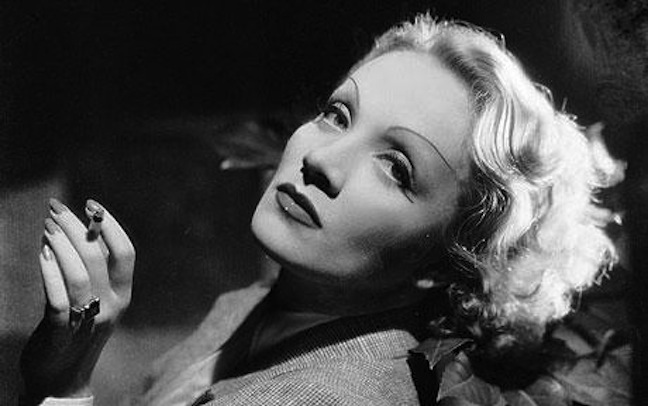
Alastair Sim, Sybil Thorndike, and the smoking hot Marlene Dietrich as actress/singer Charlotte Inwood who wears Christian Dior gowns and sings the languid torch song- “Laziest Girl in Town.”
Jane Wyman is adorable as always playing a young aspiring actress who tries to help prove her friend, Richard Todd’s innocence in the murder of performer Marlene Dietrich’s husband. One of Hitchcock’s best!- Adapted for the screen by Whitfield Cook (Strangers on a Train) and Hitchcock’s wifeAlma Reville. (Suspicion 1941, Shadow of a Doubt 1943) Based on the novel by Selwyn Jepson. With Fabulously nuanced cinematography by Wilkie Cooper(Jason and the Argonauts.)
Directed by Jack Smight (Harper 1966, The Illustrated Man 1969, Airport 1975 (1974) plus various work on television dramas and anthology series) John Gay wrote the screenplay based on William Goldman’s novel (Butch Cassidy and the Sundance Kid 1969, screenplay for The Stepford Wives, Marathon Man ’76, Magic ’78, The Princess Bride. Smight shows us sensationalist traces of The Boston Strangler killings to underpin his black satire.
Lee Remick, George Segal & Eileen Heckart on the set of No Way To Treat A Lady (1968).
No Way To Treat a Lady 1968 Stars Rod Steiger, George Segal, Eileen Heckart, Lee Remick, Murray Hamilton, David Doyle, Val Bisoglio, Michael Dunn, Val Avery, and the ladies… Martine Bartlett, Barbara Baxley, Irene Daily, Doris Roberts Ruth White and Kim August as Sadie the transvestite, a female impersonator who was a featured performer at a Manhattan cabaret.
The film has its gruesome, grotesque, and transgressive set pieces of women splayed with lipstick kisses on their foreheads. Director Jack Smight’s and writer William Goldman’s vision is outrageously dark, sardonic, satirical, penetrating, and contemptuous of motherhood and humanity in general.
From“Ed Gein and the figure of the transgendered serial killer” by K.E. Sullivan–“NO WAY TO TREAT A LADY a story about a serial killer who was psychologically abused by his mother and kills women to get revenge upon her. The killer is most likely based on William Hierans (The Lipstick Killer),yet the narrative foregrounds cross-dressing as part of the murderer’s technique, despite the fact that Hierans did not cross-dress.”
The dynamic Rod Steiger enlivens the screen as lady killer Christopher Gill, living in the shadow of his famous theatrical mother. He impersonates different characters in order to gain access to his victim’s homes, where he then strangles them, leaving his mark a red lipstick kiss on their foreheads. Gill begins a game of cat and mouse with police detective Morris Brummel (George Segal), who lives at home with his domineering mother.
There is an aspect of the film that is rooted in the ongoing thrills of watching Rod Steiger don his disguises as a sex killer. But what evolves through the witty narrative is the moral confrontation between the antagonist and protagonist surrounding their conflicting values and class backgrounds. The one psychological thread that runs through their lives is the parallel and sexual neurosis both have because of their dominating mother figures.
The opening scene… Christopher Gill impersonating Father McDowall (Steiger) is walking down the street viewed with a long shot, he’s whistling a ‘sardonic’ tune… in the vein of “the ants go marching” alongside The East River. Present, is the activity of cars passing by on the East Side Highway.
As he approaches the camera, we can see that he is wearing a priest’s frock.
We hear the city noises, the sounds of cars honking, young children plowing into him as they run by, and a young girl in a short lime green dress greets him as he continues to walk along the sidewalk.
As Gill passes Kate Palmer (Lee Remick) descending the stairs of the apartment house, he says, “Top of the morning to you, young lady!”
This energizing piece of playful film noir directed by H. Bruce Humberstone (The Crooked Circle 1932, Charlie Chan ) is based on a novel by pulp writer Steve Fisher with a script by Dwight Taylor.
I Wake Up Screaming stars the swarthy Victor Mature sandwiched between two lovely ladies, Betty Grable and Carole Landis and co-stars Laird Cregar and Elisha Cook Jr.
With a fantastic musical landscape by Cyril J Mockridge and you’ll hear the familiar melody Street Scene by Alfred Newman played over the main titles as well as this trailer… It gets me humming all over the house!
The stunningly shot frames with noir style shadows, odd angles and low lighting are lensed by cinematographer Edward Cronjager.
A model Vicky Lynn (Carole Landis) dies mysteriously and Inspector Ed Cornell (Laird Cregar This Gun For Hire 1942, Hangover Square 1945) is obsessed with Frankie Christopher’s (Victor Mature) part in the murder!
Told in flashback we see how Frankie meets Vicky who’s first waiting tables, then introduces her to the right social circles. When she’s about to head for Hollywood to become a rising starlet, someone kills her. Inspector Cornell wants Frankie to go down for the murder, and the only one he can turn to for help is Vicky’s sister Jill (Betty Grable) who isn’t exactly crazy about the guy….
Sadly the beautiful Carole Landis who had starred in One Million B.C.(1940) with Victor Mature died of an overdose and the headlined stories about her death read like this “The Actress Who Could Have Been…But Never Was.”
Marlene Dietrichwowed audiences with her stylish Milo Anderson & Christian Dior seraphic gown, dreamy bedroom eyes, pouty lips and outre sensually languid performance of “The Laziest Girl in Town” in Alfred Hitchcock’s tightly wound thriller Stage Fright 1950
Then through the sheer brilliance of Madeleine Kahn’scomedic artisty as Lily von Shtupp – she channels Dietrich’s Charlotte Inwood, with her rendition of “I’m Tired“ in Mel Brooks splendid western farce Blazing Saddles.
I thought it would be a fun thing to do this Saturday afternoon, while I’m busy spending time with a dear old friend to give you all a little something to linger on….From a smokey moody Cabaret to a bawdy saloon in the wild wild west!
I’ll never tire of you dear friends… Your ever lovin’ MonsterGirl
Superb black comedy directed by Charlie Chaplinabout an urbane cynical vegetarian, cat-loving bigamist Bluebeard who supports his invalid wife Mona (Mady Correll) and little boy by committing amorous adventures with women whom he then kills and takes their fortunes. Having lost his job of thirty years during a financial depression, he moralizes that this is the only way he can serve to take care of his family.
Chaplin is brilliant as he travels between the ‘object’ of his next bit of income as Henri Verdoux, Alias Varnay, Bonheur, and Floray. The ladies are hilariously diverse and not without ridicule… The rowboat scene is a riot!
I’ll be doing an extensive post on this film as it has caught my heart like the delirious flu… Co-stars Isobel Elsom as Marie Grosnay, Martha Raye is absolutely priceless as his lottery-winning dame Annabella Bonheur, Audrey Betz as the stodgy Martha his other wife, Marjorie Bennett as Marie’s maid, and Marilyn Nash as the young homeless girl…
Charlie Chaplin and Marilyn Nash-Â Monsieur Verdoux ’47
The Girl- “It’s a blundering world and a very sad one yet a little kindness can make it beautiful…”